 Rubika

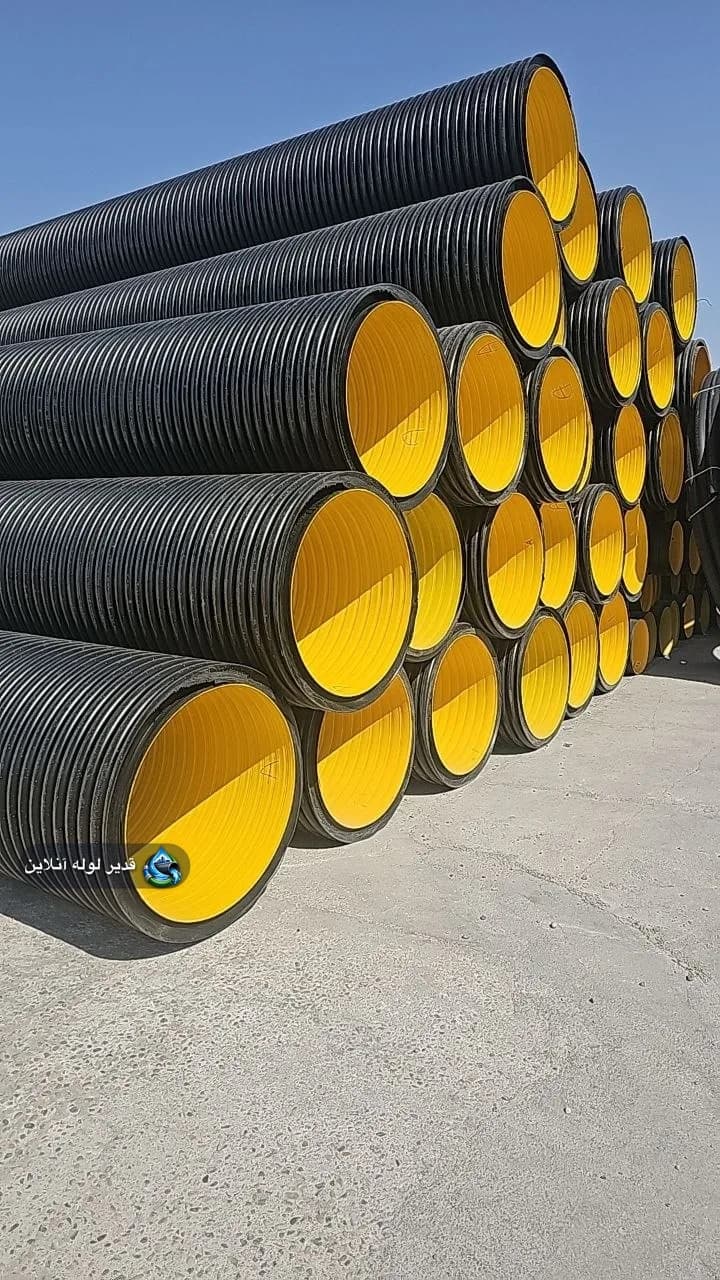
In gravity sewer networks, two plastic options come up more than any others: PVC pipe, used for years in building drainage and service connections, and double-wall polyethylene corrugated pipe, which has made its place in urban networks and large diameters. The common question is: corrugated pipe or PVC? The short answer is that each has its own range of use; in this article we make the boundary between the two clear.
The basic difference: material and wall structure
PVC pipe is made of polyvinyl chloride and usually has a solid, smooth wall. Its resistance to soil load comes from the wall thickness.
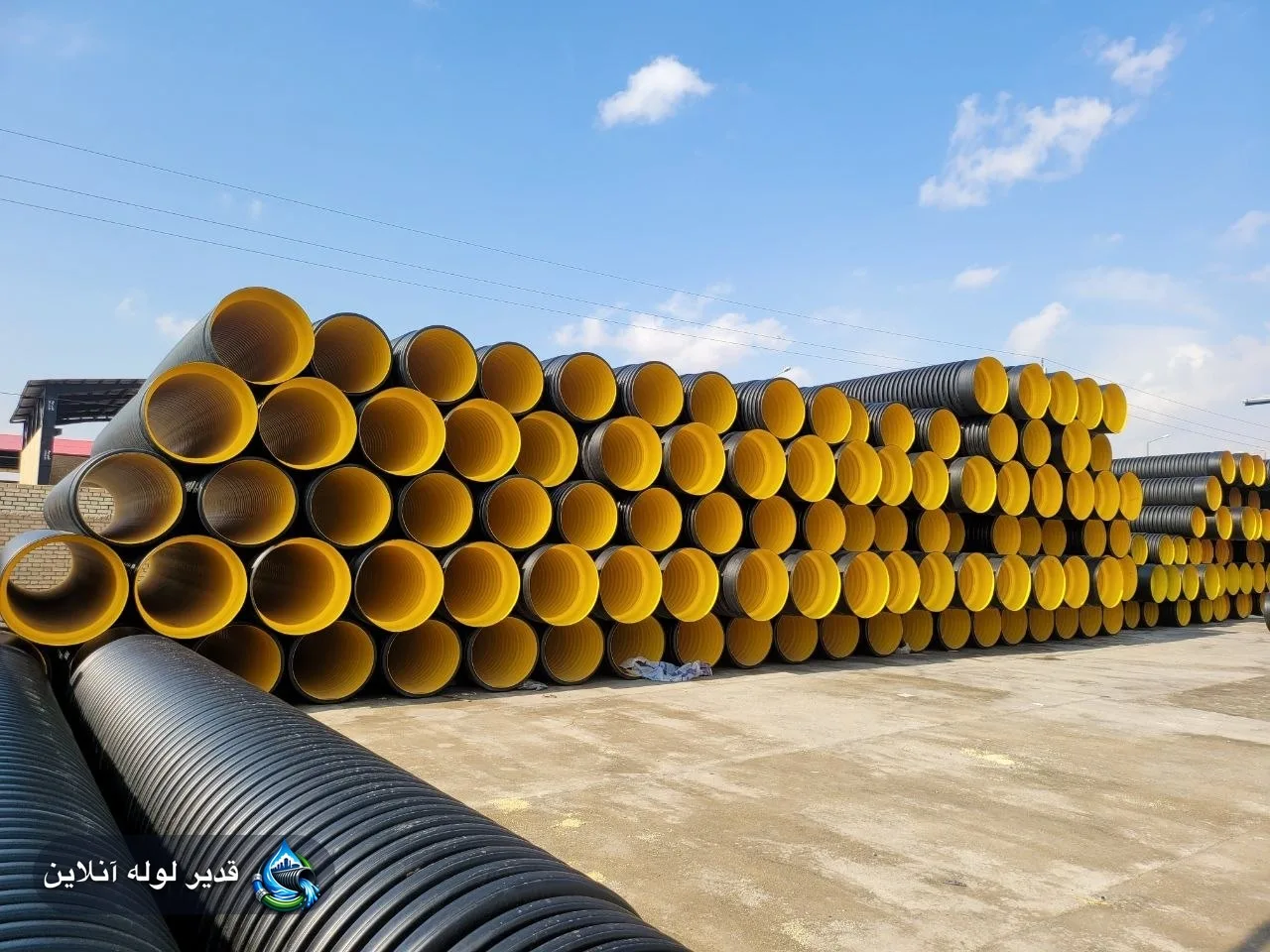
Corrugated pipe is made of high-density polyethylene (HDPE) with a structured wall: the corrugated outer wall provides the ring stiffness, and the smooth inner wall keeps the flow smooth. This structure lets the pipe reach the required stiffness with less material and stay light even in large diameters.
Comparing corrugated pipe and PVC pipe
| Criterion | Corrugated pipe (double-wall HDPE) | PVC pipe |
|---|---|---|
| Typical use | Sewer and stormwater collection networks, main lines, drainage, culverts | Building drainage, service connections and small-diameter networks |
| Typical diameters | Up to 1200 mm (and up to 2000 mm with spiral pipe) | Mostly small and medium diameters |
| Weight in large diameters | Lighter thanks to the structured wall | Heavier due to the solid wall |
| Behaviour under load | Flexible; carries the load together with the surrounding soil | Solid wall; more sensitive to impact and point loads |
| Cold weather | Polyethylene stays tough at low temperatures | Becomes more brittle in the cold and more prone to impact damage during handling and installation |
| Jointing | Coupler and EPDM seal | Socket with rubber seal or solvent cement, depending on the pipe type |
The exact figures (stiffness class, wall thickness, length) depend on each pipe's standard and manufacturer; when comparing, put both data sheets side by side.
When is corrugated pipe the better choice?
- Medium and large diameters: the larger the diameter, the more the lower weight and faster installation of corrugated pipe stand out.
- Long urban and industrial networks: coupler joints without solvent cement or welding, plus low weight, mean faster installation.
- Cold regions and busy sites: the impact resistance of polyethylene reduces damage during handling and installation.
- Soils with possible settlement: the pipe's flexibility tolerates limited ground movement without cracking.
- Stormwater and culverts: large diameters with low weight; details in the article Polyethylene culverts.
When does PVC pipe make sense?
- Drainage pipework inside buildings and short, small-diameter service connections.
- Projects where the technical specification or the client explicitly calls for PVC pipe.
- Where a connection to an existing PVC network or PVC fittings is required.
Read tips on choosing PVC pipe for sewers in the article Orange PVC pipe for sewers, and the comparison of PVC with polyethylene in The difference between polyethylene and PVC pipe.
What should you actually compare?
- The same ring-stiffness class: compare pipes at the same SN class (The difference between SN4 and SN8).
- Total installed cost, not just the price per metre: also account for transport, machinery, the number of joints and installation speed.
- Standards and documents: both pipes must have their own Iranian National Standard licence; for corrugated pipe, ISIRI 9116-3 (Corrugated pipe standard).
- Compatibility with the rest of the network: existing manholes, fittings and service connections.
Summary
For drainage inside buildings and small service connections, PVC pipe is the common and sensible choice. For sewer and stormwater collection networks, main lines and medium and large diameters, double-wall corrugated pipe is usually the better choice thanks to its low weight, impact resistance and fast installation. Today's prices for all corrugated pipe sizes are in the price table, and for project advice you can use the project inquiry form.