 Rubika

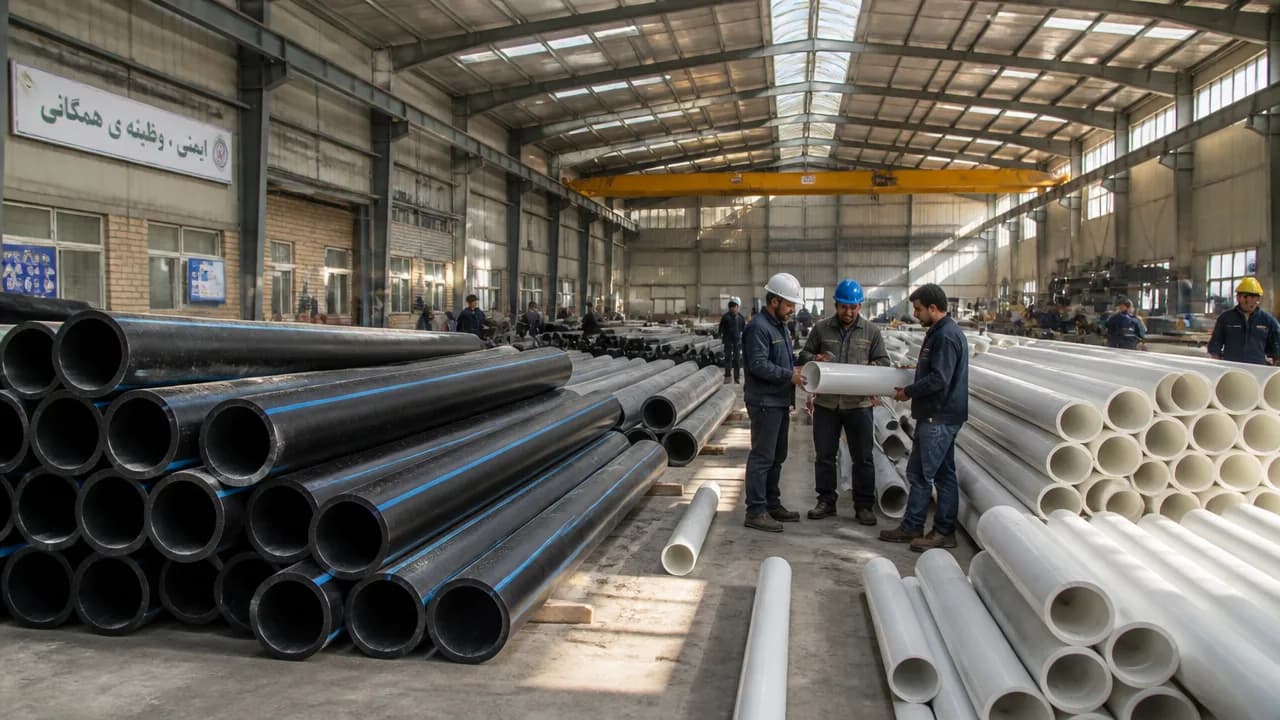
Choosing between polyethylene and PVC pipe is not just a purchasing decision; on a project, this choice can affect network durability, installation speed and maintenance costs. If the pipe is not compatible with the operating conditions, you will later face leaks, reduced performance or the need for early replacement — an issue that disrupts time and budget on construction projects.
The difference between polyethylene and PVC pipe should be assessed in terms of material, strength, application and installation method, not just by name or price. In this article we compare these two types of pipe so that you can take a more technical view and choose the most suitable option for your project conditions.
Features of polyethylene pipe
Physical properties
Because of its low weight, polyethylene pipe makes handling and storage easier, and on projects with a large number of pipe lengths it puts less strain on the installation team. This feature is of great practical importance for sites with limited access routes or where pipe has to pass through floors, ramps and tight spaces.
Structurally, this pipe copes well with ordinary site impacts and is less prone to sudden fracture than some rigid pipes. This means the risk of accidental damage during transport or handling on the installation site is lower. For example, in a landscaping project where pipes have to be laid between dirt paths and numerous points, the light weight of polyethylene pipe speeds up the work.
Corrosion resistance
One of the main advantages of polyethylene pipe is its resistance to corrosion. In contact with moisture, many corrosive environments and a considerable range of chemicals, this pipe behaves more stably than metal pipes and does not rust. This makes it a more reliable choice in systems carrying water, wastewater or more corrosive fluids.
In environments where the soil or fluid can gradually damage the pipe wall, polyethylene usually offers a better service life, because gradual corrosion like that seen in metals does not occur. For irrigation projects, the transport of certain industrial fluids or routes where the pipe is exposed to constant moisture, this feature is a serious advantage.
Flexibility and ease of installation
The flexibility of polyethylene pipe makes installation easier on routes with many bends, uneven ground or minor changes of direction. In many cases fewer fittings are needed, which can reduce installation time and potential leak points. When a pipe route on an industrial site or in open ground has to pass around obstacles, this ability becomes even more important.
During installation, this pipe usually causes the installation team less trouble, because it is easier to handle and at the same time can adapt to the route conditions to some extent. Of course, this flexibility does not mean it can be used without consideration in every situation; the bending radius, joint type and operating pressure conditions must be checked properly. Even so, in practical comparisons polyethylene pipe is often considered an efficient option for a wide range of projects because of its light weight, chemical resistance and freedom from rust.
Features of PVC pipe
Physical properties
PVC pipe, which is widely seen on construction and building services projects, is more rigid than polyethylene pipe in terms of body and structure. This rigidity means it is less formable and requires more care in cutting, alignment and jointing during installation. On the other hand, this same feature is an advantage where the pipe has to hold a fixed, defined route.
PVC pipe is heavier than polyethylene, and this shows in transport, handling and work on upper floors or in confined spaces. For this reason, on projects where installation speed and a lighter handling load matter, this difference should be anticipated in the installation planning. Even so, this weight and rigidity give installers more confidence in some applications, especially when the pipe route is straight and frequent bends are not needed.
Pressure resistance
One of the most important features of PVC pipe is its good resistance to working pressures and to conditions in which the pipe must keep its shape. This pipe performs acceptably on routes where external pressure or point loads are a factor, provided the diameter, wall thickness and bedding are selected and executed correctly. If the pipe is loaded without proper bedding, even a strong material cannot prevent damage.
For example, on routes where the pipe passes under a floor or in sections where mechanical pressure is likely, using PVC can make sense — not in every case, but when the installation conditions match the pipe specifications. In such situations, the engineer or contractor should keep in mind that the nominal strength of the pipe is no substitute for correct installation.
Durability and strength
In terms of durability, PVC pipe offers an acceptable service life if used in a suitable environment. This pipe is suitable for conditions where temperature, fluid type and mechanical stress are within a range compatible with its structure. If the project is outdoors, in direct sunlight or exposed to severe installation stresses, the decision should be made more carefully, because the stability of the pipe does not depend on its material alone; operating conditions also play a role.
In practice, PVC is mostly chosen where the pipe route is fixed, predictable and subject to little movement. For example, in some parts of building services or drainage and conveyance routes that require rigidity and precise positioning, this pipe is a reasonable choice. If the project is carried out in an orderly way and the joints are made correctly, PVC pipe can do its job without the usual problems caused by deformation or displacement.
Applications of polyethylene and PVC pipe
General applications of polyethylene pipe
Polyethylene pipe is mostly used where there are long routes, changes of direction, or a need for resistance to moisture and corrosive substances. In water supply and irrigation networks, its low weight and flexibility make handling and installation easier, and it is also easier to lay on uneven ground than many rigid options.
In agricultural projects, polyethylene is a common choice for carrying water from the source to different parts of the farm, because it can be laid with fewer fittings and in considerable lengths. In many civil and industrial schemes it is also used for carrying water, certain fluids compatible with the pipe material, and on routes where vibration or ground settlement could put stress on more rigid pipes. If you need the technical details of this product, the specifications of polyethylene pipe should be checked against the working pressure and fluid type.
General applications of PVC pipe
PVC pipe is mostly seen in applications where rigidity, a smooth internal surface for fluid flow and orderly installation on fixed routes are important. In building construction, this pipe is usually used for soil and waste, vent pipes and some drainage routes — that is, places where the pipe has to stay on a defined route and not deform much.
In light industrial projects and some workshop installations, PVC is also used to carry substances that are compatible with its material. Its main advantage in these applications is orderly installation and ease of cutting and jointing. However, on routes with impact, external pressure or ground movement it should be chosen with more care, because its rigid material is more sensitive to environmental changes.
Comparison of applications
If the aim is to carry water over long routes or in irrigation networks, polyethylene usually has the upper hand, because it is lighter and offers less troublesome installation on curved or uneven routes. Conversely, if the project needs a pipe installed on a fixed, controlled route, PVC is the more suitable option, especially in building services where vertical and horizontal routes are defined in advance.
In terms of advantages, polyethylene scores on corrosion resistance, lower risk of fracture from impact and ease of installation. But these features do not always mean absolute superiority; in some building applications, the rigidity of PVC makes installation more orderly, and it is the more common choice for soil drainage or vent pipes. On the other hand, PVC has greater limitations against some mechanical stresses and outdoor conditions.
In short, the main difference in the application of these two pipes comes down to the type of project: polyethylene is more suitable for conveyance and flexible routes, and PVC for fixed routes and building services. The right choice is made when you match the pipe material to the pressure, installation location, fluid type and installation conditions.
Advantages and disadvantages of each type of pipe
Advantages of polyethylene pipe
Polyethylene pipe works out more economical on many projects, because it is lighter and easier to transport, handle and install. When a contractor is dealing with large lengths, this lightness can reduce the number of workers, preparation time and incidental costs. In addition, thanks to its good resistance to corrosion and rust, the need for frequent replacement or repairs is usually lower, which helps reduce maintenance costs in the long run.
From an environmental point of view, polyethylene is also a noteworthy choice on projects where durability and reducing material waste are important. Its flexibility means less breakage and waste on long routes or where the ground is not completely even. For example, on a landscaping site where the pipe route passes several obstacles and changes of direction, polyethylene pipe usually provides a cleaner installation with fewer cuts and joints than more rigid options.
Disadvantages of PVC pipe
PVC pipe has limitations in installation and maintenance that should be considered in planning from the start. This pipe is more sensitive to impact and sudden pressures, and if it is not handled carefully during transport or installation, the likelihood of cracking or local damage increases. This means installing it on some sites requires more care and control.
In addition, maintaining PVC pipe on routes where temperature changes, local settlement or mechanical stress are likely can be troublesome. If clamping, grading or supports are not installed correctly, leaks, joint separation or reduced performance will appear later. In practice, this means the contractor has to spend more time supervising installation details in addition to buying the pipe — and this hidden cost shows up on large projects.
Disadvantages of polyethylene pipe and advantages of PVC
Despite its many advantages, polyethylene pipe is not flawless in every application. Installing it requires a proper understanding of the joint type, quality control of welds or fittings, and attention to operating conditions. If these are not observed, the inherent advantages of the pipe will not deliver the desired result. Also, on some projects that need greater rigidity, the high flexibility of polyethylene may create limitations for the installer and may require restraints or more careful design.
Conversely, PVC has an advantage in some applications because of its stiffness and stable shape. When the pipe route is straight and deformation matters less, this feature can make installation more orderly. So the difference between polyethylene and PVC pipe is not just a matter of material or appearance; polyethylene leads on durability, light weight and maintenance costs, while PVC offers the advantage of rigidity and orderly installation on some fixed, low-stress routes. The right choice is made when the project conditions, type of loading and installation sensitivities are considered together.
Technical points in choosing a pipe
Tips for choosing the right pipe
The choice between polyethylene and PVC pipe should not be made just by looking for "the better material"; what matters is how the pipe behaves under the actual conditions of the project. For example, if the route is exposed to impact, soil movement or needs more flexibility, the pipe's bending behavior and mechanical strength become important. And if the pipe will be exposed in part of the works to chemicals, constant moisture or temperature changes, its technical properties must be matched more precisely to the operating conditions.
When choosing the right pipe, a few key questions must be answered: is the pipe for carrying water, or for sewage and drainage? Is the route buried or surface-mounted? How important are joints on site? And on a tight project, is installation speed the priority, or long-term durability? These are the details that determine the difference between polyethylene and PVC pipe in practice, not just their name or appearance.
Cost analysis of each type of pipe
The real cost of each type of pipe is not limited to its purchase price. Transport cost, ease of installation, the need for fittings, installation time and even the risk of future failure must be considered together. A pipe may look more economical at first, but if its installation takes longer or it needs repair sooner under the project conditions, the final cost goes up.
On a construction project, if the installation team is looking for fast installation and fewer joints, labor costs and working time can have a serious effect on the final choice. On the other hand, on a project with a simpler network and lower working pressure, it may make more sense to choose an option that is more familiar to install and has simpler installation details. So cost comparison should be done together with the route length, installation conditions and operational sensitivity, not separately from them.
That is why engineers and contractors usually make purchases with the full project life cycle in mind. At ghadirlouleonline.ir, our focus on "industrial pipe and fitting supply" helps you avoid judging the choice on initial price alone and consider the more suitable option for your installation needs.
Comparison of durability and service life
Durability and service life only have meaning when the pipe is assessed under real working conditions. If the pipe is exposed to mechanical stress, moisture or environmental changes, you need to see how well it keeps its shape and performance over the long term. A pipe that installs without trouble in the first days is not really a good choice if it needs frequent replacement or repair later in the project.
In this comparison, installation quality matters as much as the pipe material. Correct installation, proper jointing and the right choice of diameter and wall thickness have a direct effect on service life. For this reason, the best decision is made when the technical specifications, project conditions and maintenance costs are considered together.
If you want your choice to be based on more than guesswork, a specialist review of your project specifications can make the way clearer. To choose the right pipe, you can get advice from ghadirlouleonline.ir and review the suitable options more precisely based on the installation needs of your project.
Summary
Summing up the difference between polyethylene and PVC pipe shows that the right choice depends on where it is used and the operating conditions. Polyethylene pipe is usually more suitable for routes that need flexibility, chemical resistance and better impact tolerance. PVC pipe, on the other hand, is mostly used where simple installation, low weight and conventional use are the priority.
If you look at these differences only in terms of the product name, the chance of making the wrong choice increases. But when you consider working pressure, fluid type, environmental conditions, installation method and project constraints together, decision-making becomes more precise and you avoid rework, leaks, early damage and extra costs. On construction projects, this seemingly simple choice can have a direct effect on network durability and installation quality.
For the final choice, it is better to base your decision on the technical specifications and the real needs of the project rather than on general impressions. If you are still undecided between these two options, reviewing the products and getting specialist advice at ghadirlouleonline.ir can make the choice clearer and help you source a pipe that suits your project conditions.