 Rubika



Factors affecting the price of corrugated pipe
A quick look at corrugated pipe prices shows very large differences between the various types. These wide price differences are due to a number of factors that can affect the price. The most important factors affecting the price of corrugated sewer pipe include:
- Material and quality of raw materials: The type and quality of the polyethylene used differs from one pipe to another. The higher the quality of the raw materials, the higher the price.
- Pipe diameter and size: Polyethylene corrugated pipe comes in a wide range of sizes, and size is a major factor in determining the price. As the diameter and size of the pipe increase, more raw material is used, so the price also rises.
- Pipe wall thickness: The thickness of the inner and outer walls of these pipes varies and has a direct effect on the price. Pipes with thicker walls, designed to withstand higher loads, are usually more expensive.
- Exchange rate: Since some of the raw materials for these products are imported, their price depends on exchange rate fluctuations.
- Effect of pipe length on price: Longer pipes may be more expensive because of the complexity of production and the amount of raw material used.
- Effect of SN4 and SN8 on price: Corrugated pipes in stiffness class SN8 are more expensive than SN4, because the type and amount of raw material used in them differ.
- Production cost and production process: More complex technologies and more precise production processes may cost more.
- Buying corrugated pipe from the manufacturer: The number of intermediaries sharply increases the final price of the pipes. By buying from a corrugated pipe manufacturer, you can cut out the intermediaries and reduce costs.
- Effect of order quantity: The length of pipe you order has a direct effect on the price. Buying corrugated pipe in bulk can come with a discount.
- Transport cost: The distance between the buyer and the corrugated pipe factory has a direct effect on the transport cost and ultimately changes the price of the pipe.
What is corrugated pipe?
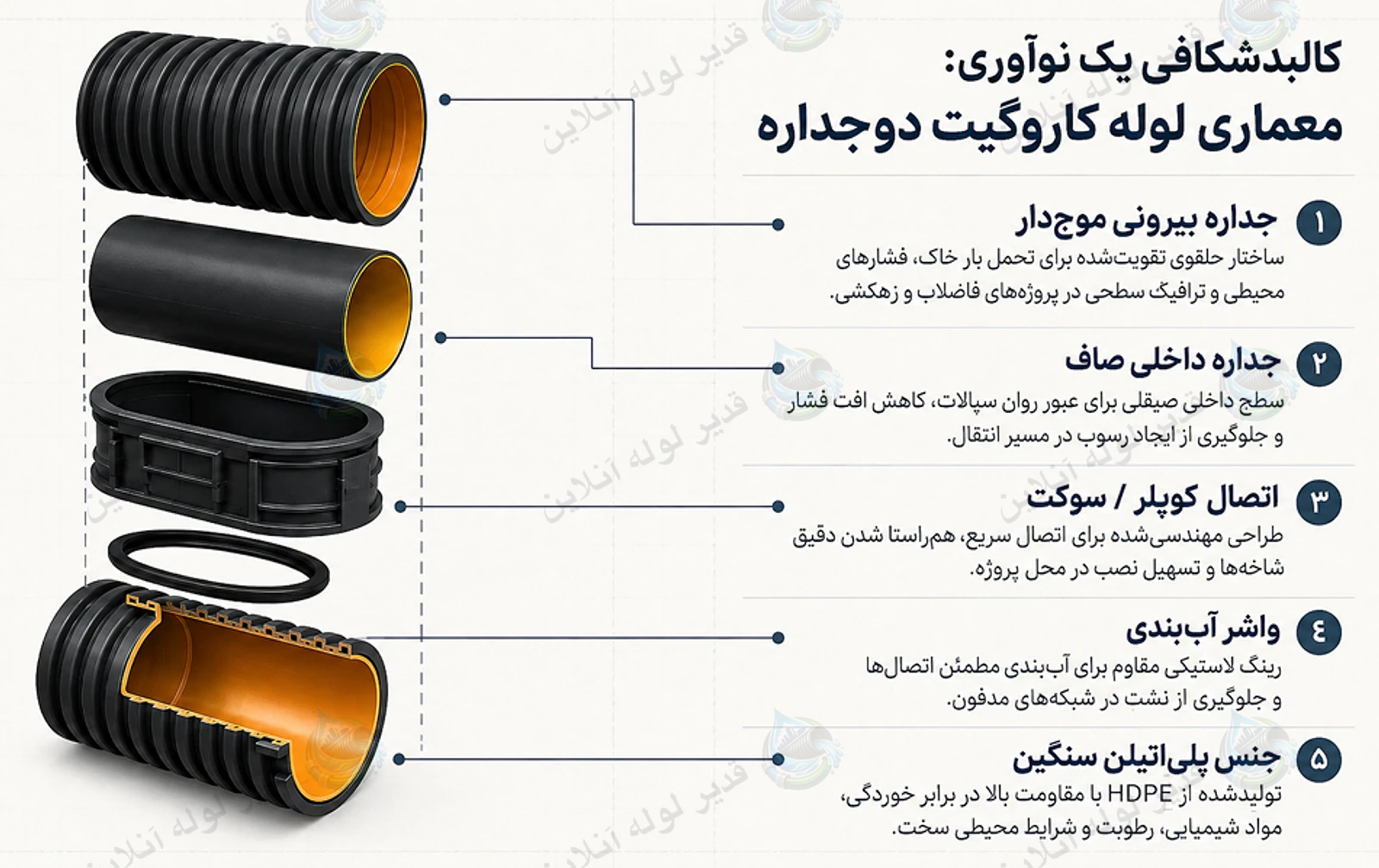
Corrugated pipe, or polyethylene sewer pipe, is a type of double-wall plastic pipe made from high-density polyethylene (HDPE). These pipes are designed specifically for use in sewage conveyance, drainage and low-pressure fluid transfer systems. Polyethylene corrugated pipes have a double-wall structure: the inner layer is smooth, and the outer layer is formed of alternating, closely spaced rings designed to strengthen resistance to pressure and heavy loads. The article "What is corrugated pipe?" examines this pipe, its structure and its features in full detail, and you can read it for more information.
Double-wall structure of corrugated pipe
In general, corrugated pipes consist of two main layers: an inner layer and an outer layer. The inner layer of these pipes is smooth and low-friction so that fluid flows through it easily and sedimentation is prevented. This layer is made of HDPE polyethylene, which has high resistance to corrosion and chemicals.
The outer layer of the pipe is designed with spiral corrugations or alternating rings, which help reinforce the pipe structure against external pressures and heavy loads. In addition to increasing strength, this structure increases the pipe's flexibility, allowing it to withstand ground movement and dynamic loads.
Raw materials for corrugated pipe production
Because of their long service life, corrugated pipes are the first choice for water and sewer networks. The reason for this durability lies in the raw materials used to produce corrugated pipe. High-density polyethylene (HDPE) has a compact, linear molecular structure without side chains. This is why it increases the pipe's resistance to heavy soil loads, impact and the corrosive chemicals in sewage. In addition to HDPE, the raw materials for these pipes include carbon black (black masterbatch), which acts like a shield protecting the pipe against the sun's damaging ultraviolet (UV) rays. Colored masterbatch is used in the inner layer to make inspection and CCTV surveying inside the pipe easier. The combination of these materials ultimately produces a flexible, lightweight product that lasts more than 50 years.
Advantages of using corrugated pipe
Corrugated pipe offers many advantages in municipal sewer systems, drainage and other applications, which is why it has a special place in civil engineering projects. Some of the advantages of these pipes are listed in the table below:
| Feature | Description |
|---|---|
| Chemical resistance | Resistant to corrosive substances |
| Light weight | Easy transport and installation |
| Flexibility | Resistant to soil settlement |
| Effective sealing | Prevents leakage |
| Long service life | More than 50 years |
Ghadir Louleh Pasargad corrugated pipe sizes
Double-wall corrugated pipe is supplied in 12 sizes, and each size has its own page with the factory dimension table, classes and today's price: 110, 160, 200, 250, 315, 400, 500, 600, 700, 800, 1000 and 1200 mm. For larger diameters, see spiral pipe.
Ring stiffness classes SN4 and SN8
Ring stiffness is the pipe's capacity to withstand soil and traffic loads. According to the factory catalog, classes SN4 and SN8 correspond to 4 and 8 kN/m² respectively under the short-term test of ISO 9969. The values of 16 and 31.5 kN/m² shown next to the classes in the price table are the values of the same two classes under the DIN 16961-2 method, which the factory uses for quality control; these are two different methods for the same class, not two different classes.
The class is determined by the burial depth, soil type and traffic load along the route: SN4 for shallow routes without heavy traffic, and SN8 for urban streets, greater depths and main lines.
Jointing and sealing
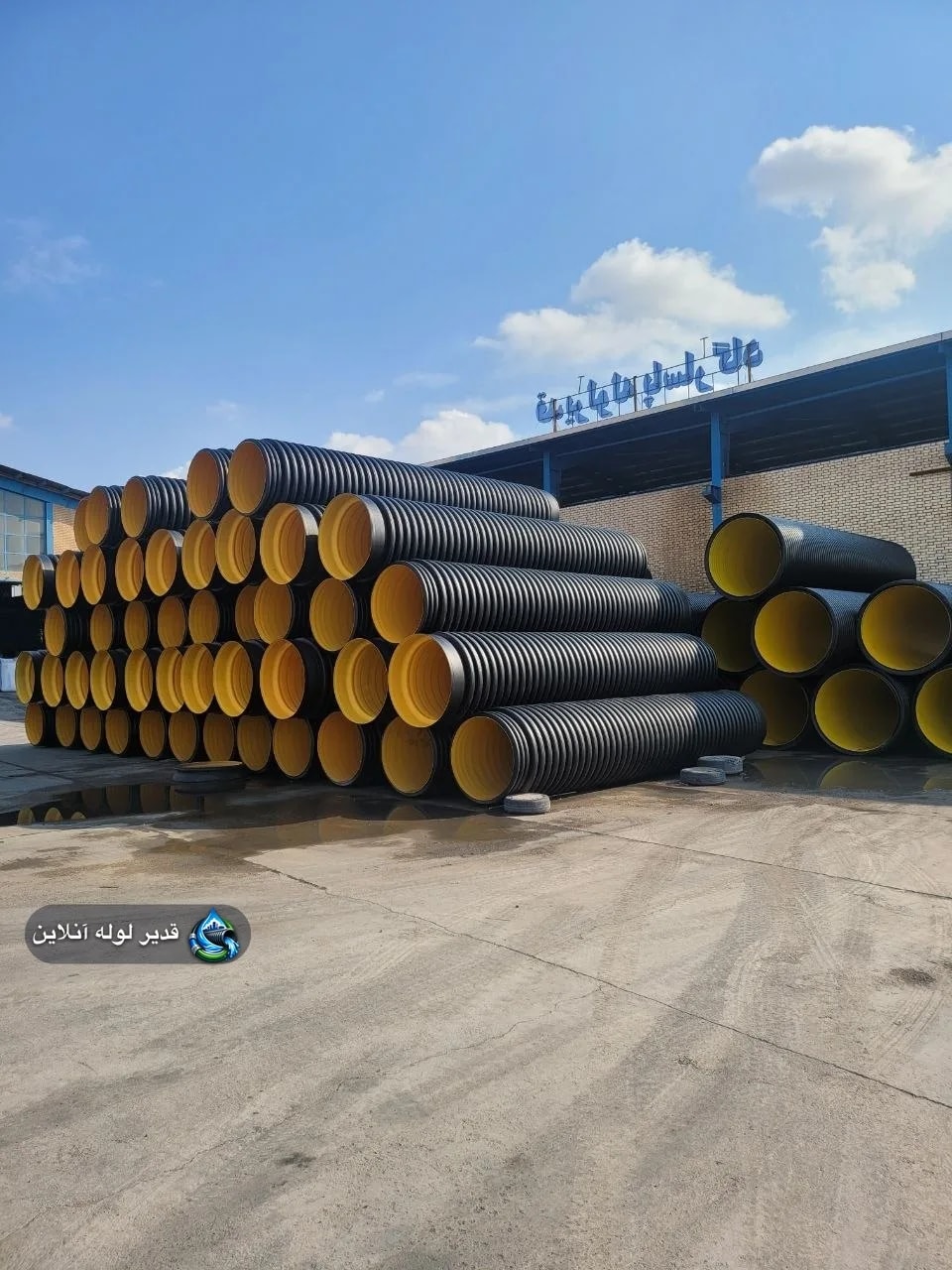
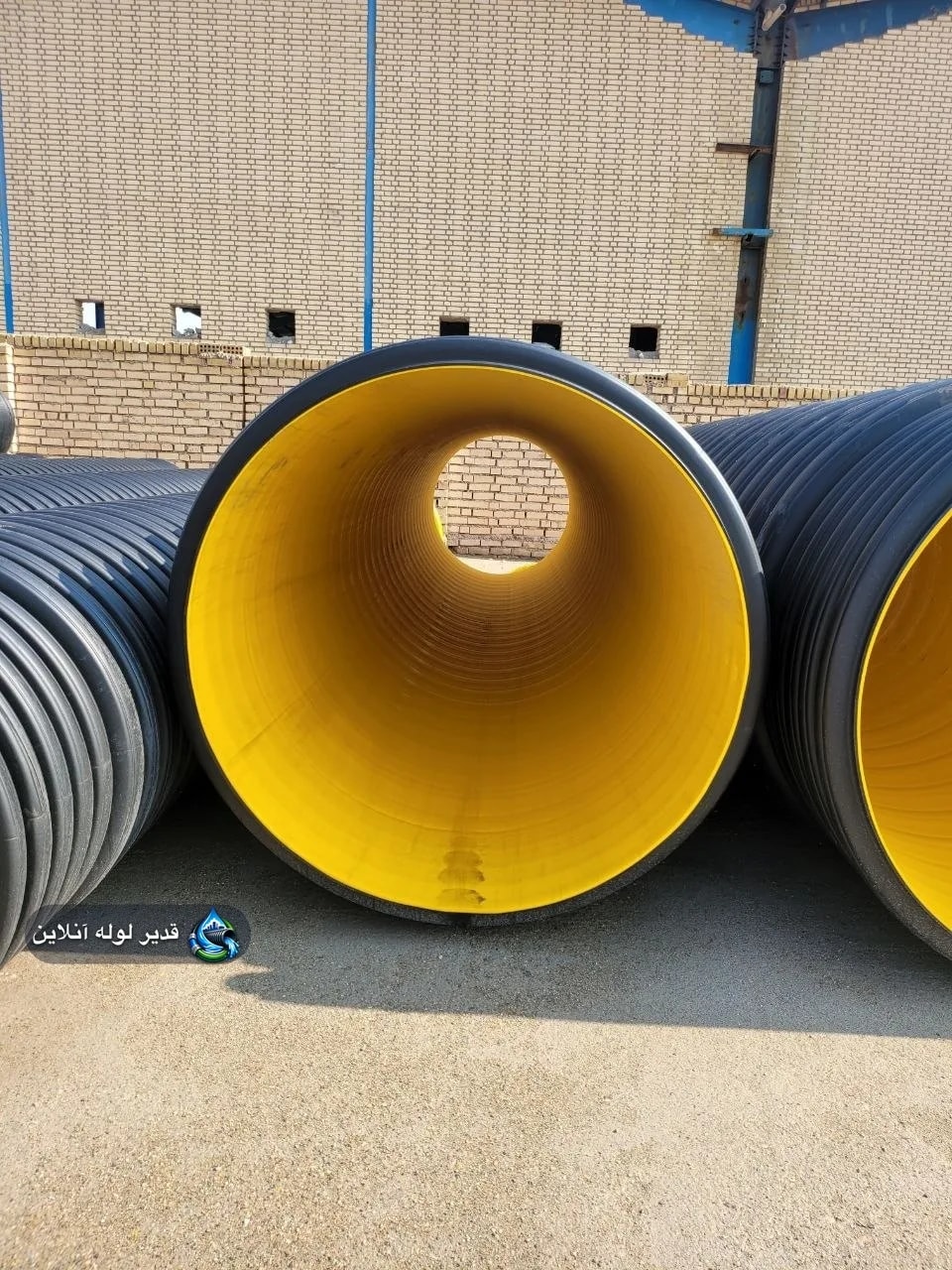
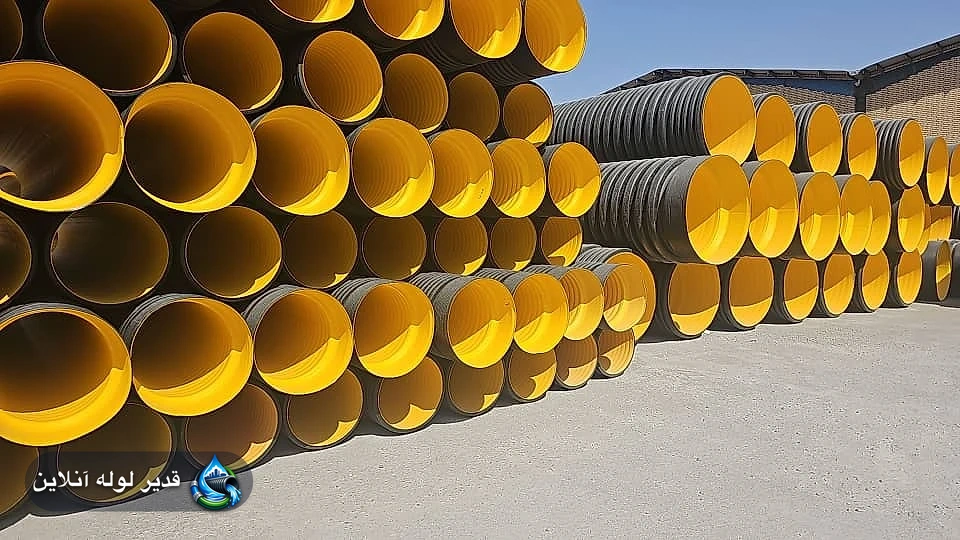
According to the factory specification sheet, the pipes are produced with an integral double-layer coupler; the double-layer coupler prevents the joint from flaring open, and an EPDM rubber gasket seals the joint. The outer color of the pipe is black, and the inner wall is yellow and UV-resistant.
Corrugated pipe standards
Dimensional and ring stiffness checks are carried out according to INSO 9116-3 and DIN 16961-2, and other tests according to EN 13476. Reference standards in the factory specification sheet: INSO 9116-1, INSO 9116-2, INSO 9116-3, DIN 16961-1, DIN 16961-2 and EN 13476. Images of the licences and certificates are available on the Documents and certificates page.
Corrugated pipe carrying capacity of different vehicles
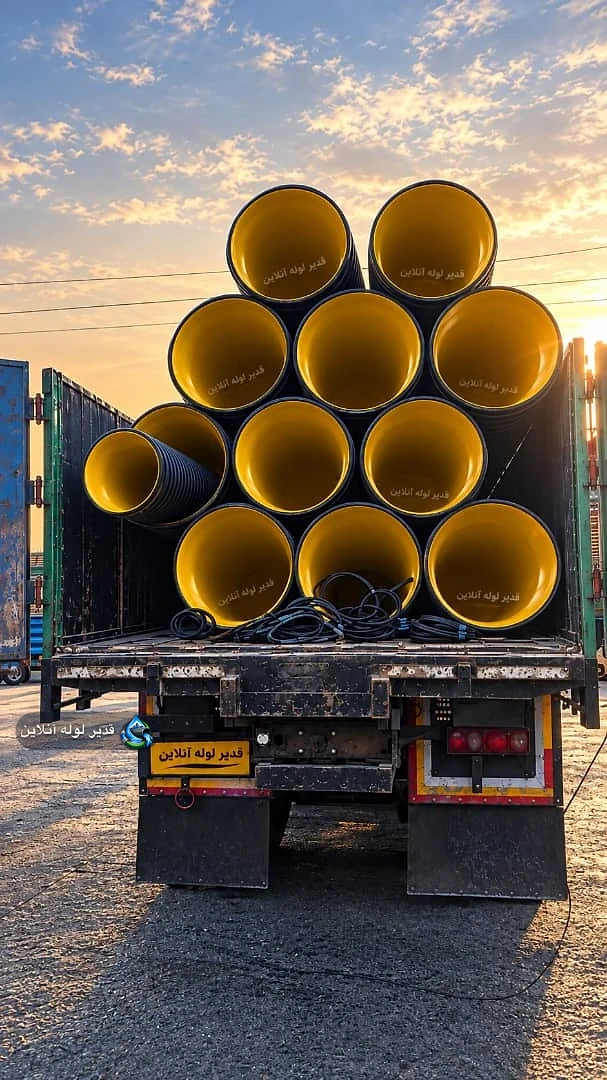
Because the pipes differ in size, the quantity that can be carried varies between vehicles. For our customers' information, the table below shows the corrugated pipe carrying capacity of different vehicles:
| Size | Single-axle truck | Tandem-axle truck | Transit trailer |
|---|---|---|---|
| 160 | 159 lengths | 159 lengths | 2300 m |
| 200 | 100 lengths | 100 lengths | 1500 m |
| 250 | 60 lengths | 60 lengths | 960 m |
| 315 | 36 lengths | 36 lengths | 576 m |
| 400 | 25 lengths | 25 lengths | 330 m |
| 500 | 15 lengths | 15 lengths | 180 m |
| 600 | 9 lengths | 9 lengths | 132 m |
| 700 | 6 lengths | 6 lengths | 72 m |
| 800 | 5 lengths | 5 lengths | 60 m |
| 1000 | 4 lengths | 4 lengths | 48 m |
| 1200 | 3 lengths | 3 lengths | 36 m |
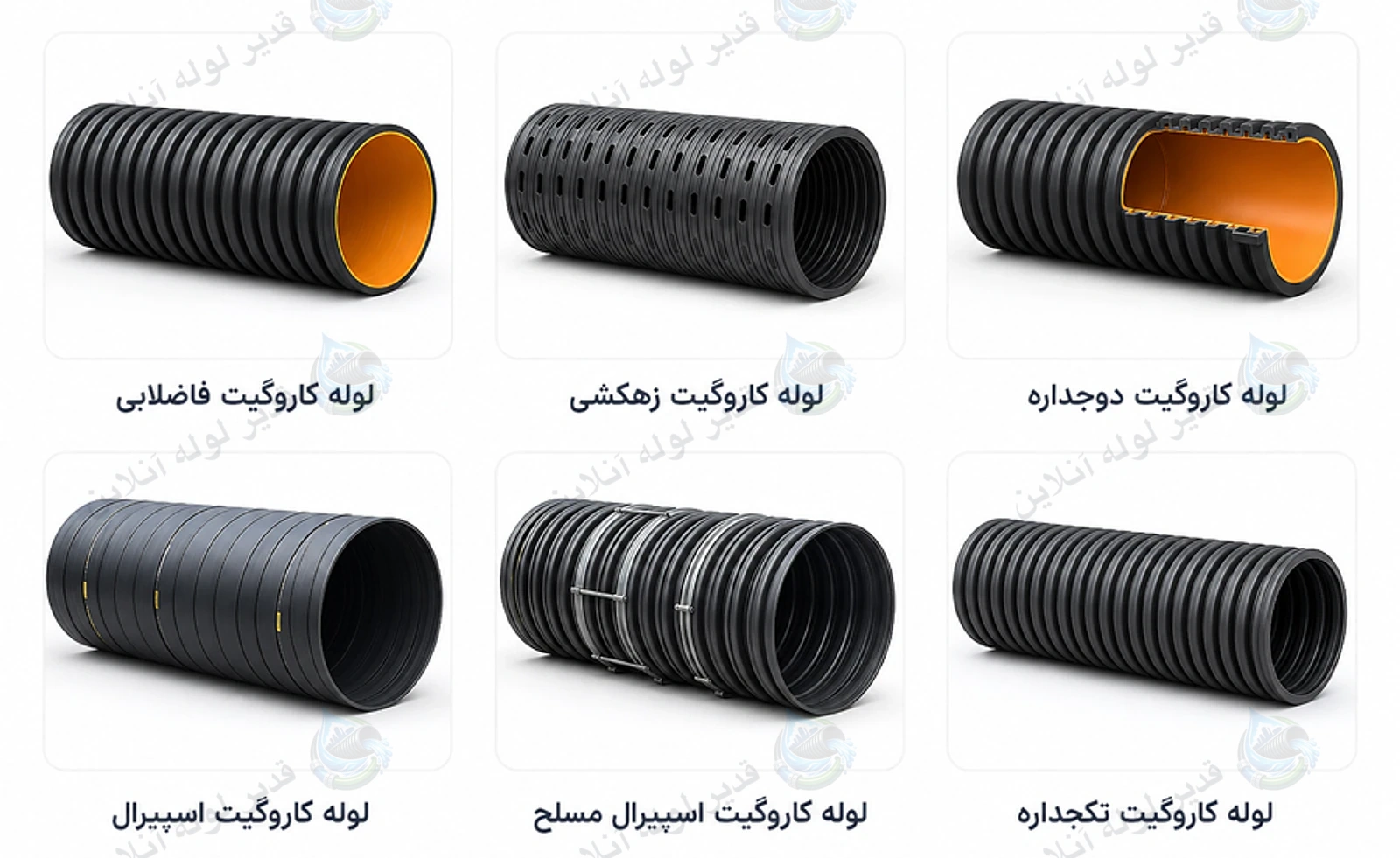
Types of corrugated pipe produced
Spiral corrugated pipe
Spiral corrugated pipe refers to pipes whose outer layer is designed with a spiral or ring-grooved profile. This design increases the strength of the pipe and makes it more resistant to external pressures. The inner layer of these pipes is smooth and resistant to sedimentation, and the outer spiral layer helps reinforce the structure and increase the pipe's flexibility. Spiral corrugated pipe is mostly used in projects that need to withstand low to medium loads, such as drainage and sewer systems. The most important features of these pipes include high resistance to mechanical loads and flexibility. The diameters supplied and today's price are listed on the spiral pipe page.
SN4 corrugated pipe
SN4 corrugated pipe is produced for light-duty, shallow projects. This pipe is mostly used in low-pressure sewer networks, agricultural land drainage and roads without heavy traffic loads. Because its wall is thinner than that of higher classes, this pipe is much lighter, cheaper and quick to install.
SN8 corrugated pipe
SN8 corrugated pipe is used in municipal and industrial sewer projects. This double-wall pipe is highly capable of withstanding heavy soil loads and urban traffic at the same time. Given its high strength and reasonable price, you can use these pipes for main sewer lines and surface water collection.
Applications of corrugated pipe
Corrugated pipes are used in sewage conveyance projects, agricultural land drainage, septic tank construction, water supply networks and the transfer of chemicals in various industries. The most important applications of these pipes include:
Municipal sewerage
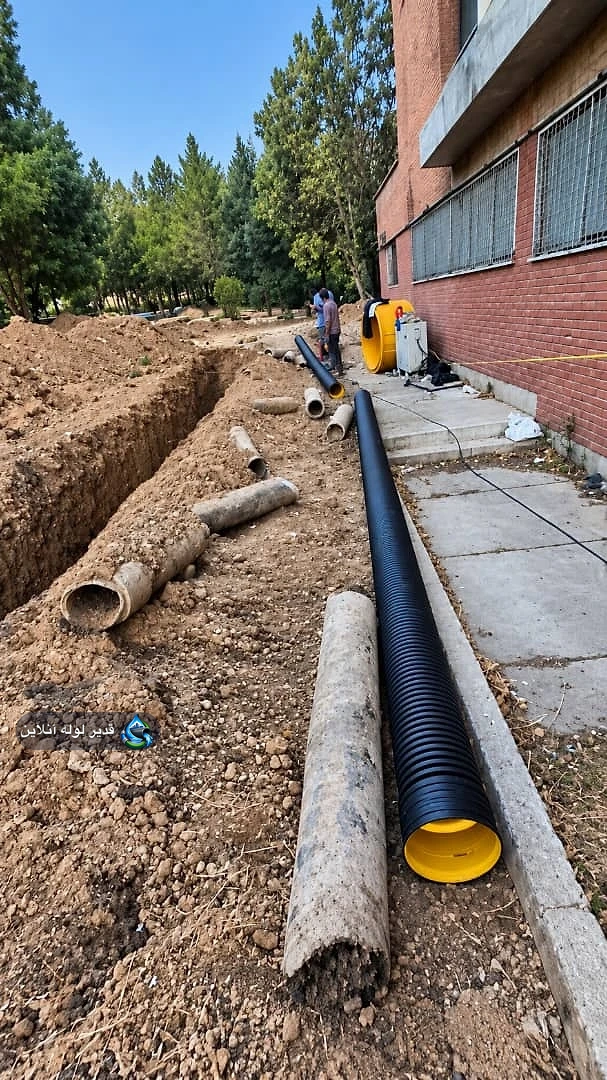
Corrugated sewer pipes are used to convey domestic, industrial and municipal sewage. Because of their high resistance to chemicals, acids and various pollutants, these pipes are very well suited to sewage conveyance systems. The double-wall structure of this corrugated sewer pipe prevents deposits from forming inside the pipe, and its smooth inner surface eases the flow of sewage. Corrugated polyethylene sewer pipes are also resistant to external pressures and are used in underground systems and municipal sewer networks as a durable, cost-effective option.
Fluid transfer
Thanks to their strong and flexible structure, corrugated pipes are used to convey low-pressure fluids in a variety of projects. These pipes can be used for irrigation systems, surface water conveyance and even the transfer of non-corrosive industrial materials. The high resistance of corrugated pipes to internal and external pressures makes them an excellent option for use in a variety of environmental conditions.
Mining projects
In mining projects, these pipes are used to convey industrial fluids and special effluents because of their high resistance to chemicals and corrosion. These pipes are also used in mine drainage systems to collect and channel surface water or groundwater.
Corrugated pipe selection guide
Because of the wide variety of these pipes, choosing one always involves a number of challenges. The most important parameters to consider when choosing corrugated pipe are:
- Pipe size and inner diameter: the pipe diameter should be selected based on the sewage flow rate.
- Ring stiffness class: the pipes are produced in classes SN4 and SN8. If the pipe is buried at great depth or under heavy traffic loads, you should use stiffness class SN8.
- Type of effluent and chemical resistance: although high-density polyethylene is highly resistant to acidic substances, the weight class and the thickness of the inner layer should be checked more carefully when conveying industrial effluents containing aggressive petroleum solvents.
- Joint type and burial depth: the pipe sealing method should be selected according to the amount of soil thrust and the burial depth of the pipe to prevent future leaks.
Assessing the factors above requires more technical and computational detail. For a sound, flawless choice, we recommend reading our corrugated pipe buying guide.