 Rubika

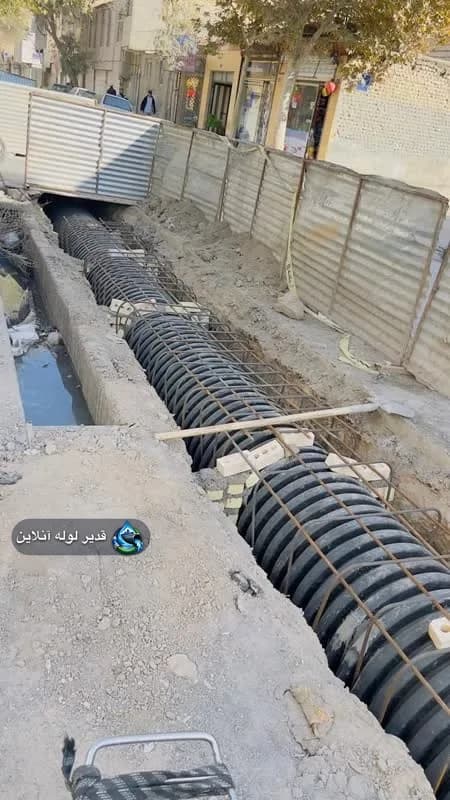
If you have requested a quote for corrugated pipe for a sewer or surface water project, the seller's first question was probably: "Do you want SN4 or SN8?" From the outside these two classes look almost the same, but choosing the wrong one either raises the project cost for no reason or lets the pipe deform under soil and traffic load. In this guide we explain in simple terms the difference between SN4 and SN8 corrugated pipe and where each one is used.
What does SN mean for corrugated pipe?
SN stands for Stiffness Nominal, or "nominal ring stiffness": the resistance of the pipe wall to external pressure that tries to squeeze the round cross-section of the pipe into an oval. Its unit is kilonewtons per square metre (kN/m²), and the number next to SN indicates the minimum ring stiffness of the pipe:
- SN4: ring stiffness of at least 4 kilonewtons per square metre
- SN8: ring stiffness of at least 8 kilonewtons per square metre
Put simply, the wall of an SN8 pipe is twice as stiff as SN4 and deforms less under the same load.
How is ring stiffness measured?
According to ISO 9969, a section of pipe is placed between two flat plates and compressed at a constant speed until its diameter is reduced by 3 percent. The force needed for this deformation is converted to ring stiffness and compared with the nominal class. This test is one of the main quality-control tests for double-wall polyethylene pipe under the national standard ISIRI 9116-3, and its result is recorded in the factory test report.
SN4 vs SN8 at a glance
| Feature | SN4 (light-duty class) | SN8 (heavy-duty class) |
|---|---|---|
| Minimum ring stiffness | 4 kN/m² | 8 kN/m² |
| Appearance | Similar from the outside; the difference is in wall thickness and geometry, and the class is printed on the pipe body | |
| Weight per metre | Lower | Higher |
| Price | More economical | More expensive (in proportion to weight) |
| Typical application | Green spaces, sidewalks, agricultural drainage, shallow depth without heavy traffic | Under streets and roads, heavy traffic, deep burial, weak soil or high groundwater |
Why is SN8 corrugated pipe more expensive?
The price of corrugated pipe is effectively set by weight: the weight per metre of pipe multiplied by today's price per kg. To achieve higher stiffness, the wall of SN8 pipe contains more material, so each metre is heavier and correspondingly more expensive.
The practical result: choosing SN8 where SN4 is enough is just an extra cost, and saving with SN4 where SN8 is needed increases the risk of pipe deformation, leakage at the joints and network failure. See today's price for both classes in the corrugated pipe price table.
Which class should you choose? 4 deciding factors
1. Traffic load on the pipe route
The most important factor is the load that reaches the pipe from the ground surface. A route under a street, road, parking lot or an area used by trucks and heavy machinery usually needs SN8. In green spaces, sidewalks and farmland where no heavy loads pass over, SN4 is often enough.
2. Burial depth
Burial depth matters in both directions. At shallow depth, vehicle wheel loads reach the pipe without being spread out; at great depth, the weight of the soil itself on the pipe increases. In both cases a stiffer class gives a larger safety margin.
3. Soil type and groundwater level
In loose, clayey or saturated soils and where groundwater is high, the surrounding soil does less to support the pipe and the pipe has to carry a larger share of the load itself; these conditions usually point toward SN8.
4. Installation quality and compaction
Corrugated pipe is a flexible pipe: it carries load together with the compacted soil around it. A proper bedding and correct compaction of the soil around the pipe affect its performance as much as the SN class. Even an SN8 pipe may deform excessively if it is installed in a trench with uncompacted backfill. We cover installation details in the corrugated pipe installation guide.
Practical summary for choosing the class
- SN4 is usually suitable for: drainage of agricultural land and sports fields, sewer and surface water networks in green spaces and sidewalks, service connections and shallow routes without heavy traffic.
- SN8 is usually suitable for: municipal sewer networks under streets, crossings under roads and highways, industrial sites and parking lots, deep burial and weak soil.
These are rules of thumb. In municipal and government projects, the pipe class is determined by the project consultant based on structural calculations (for example the ATV-DVWK-A 127 method) and the technical specification, and that is the basis for purchasing.
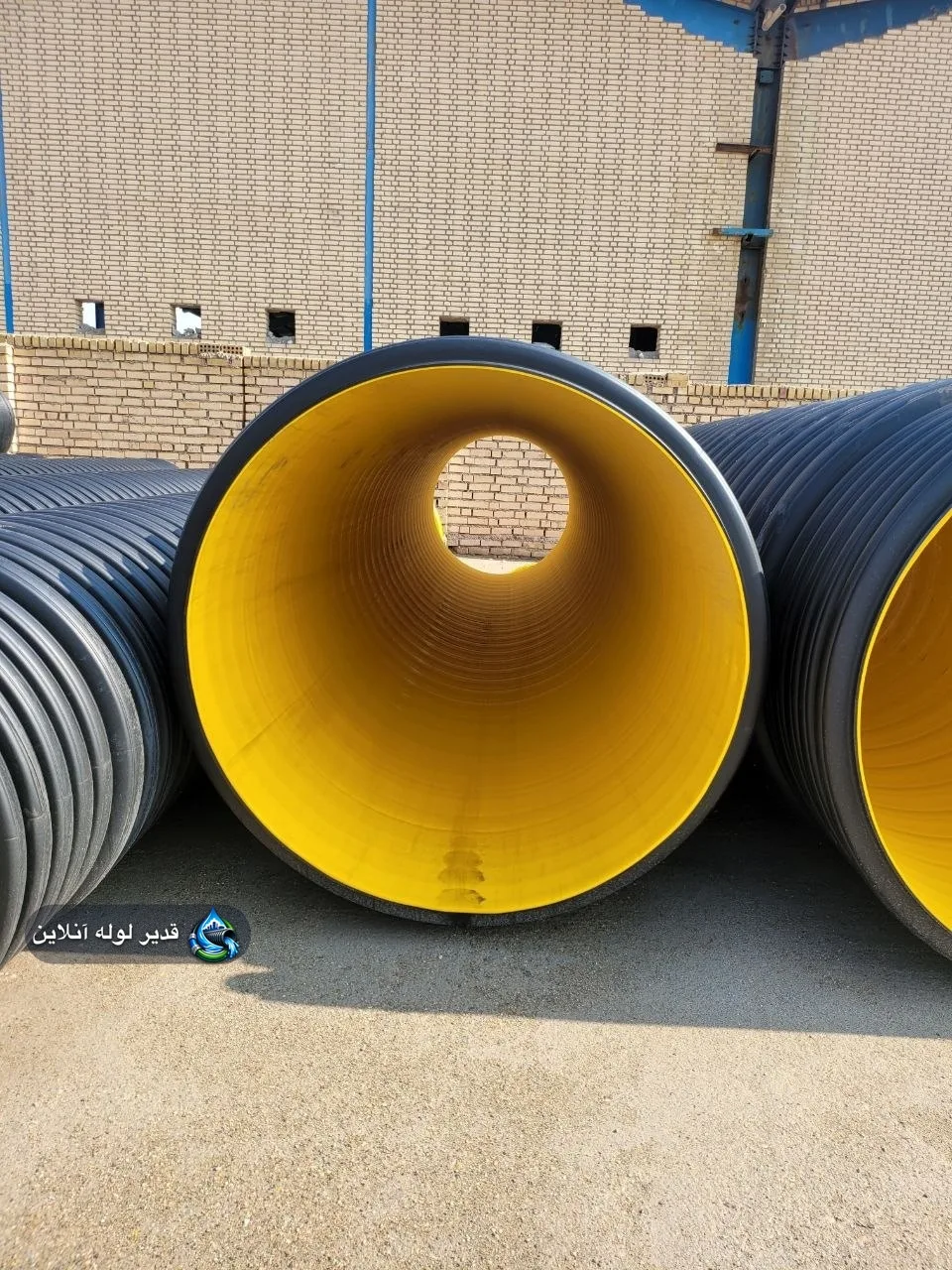
Common mistakes in choosing the corrugated pipe class
- Choosing on price alone: the price difference between SN4 and SN8 is negligible compared with the cost of re-excavating and repairing the network.
- Assuming SN8 makes up for poor installation: without a proper bedding and correct compaction, no class performs as it should.
- Ignoring temporary construction loads: loaders and trucks driving over the trench during construction are also traffic load.
- Not checking the documents: ask the seller for the ISIRI 9116-3 standard licence and the ring stiffness test report; the SN class must be confirmed by testing, not just written on the invoice.
Qadir Lule SN4 and SN8 corrugated pipe
Ghadir Louleh Pasargad double-wall corrugated pipe is produced in sizes from 110 to 1200 mm and in both SN4 and SN8 classes, with the ISIRI 9116-3 mandatory standard licence and an EPDM sealing gasket. Each size has its own page with a dimensions and price table: corrugated pipe sizes.
If you have not yet decided on the pipe size, read the guide to choosing the right corrugated pipe size. You can also see the factory documents and a sample test report on the certificates page. For large projects, enter your route details in the project inquiry form so our specialists can help you choose the class and size.