 Rubika

Introduction
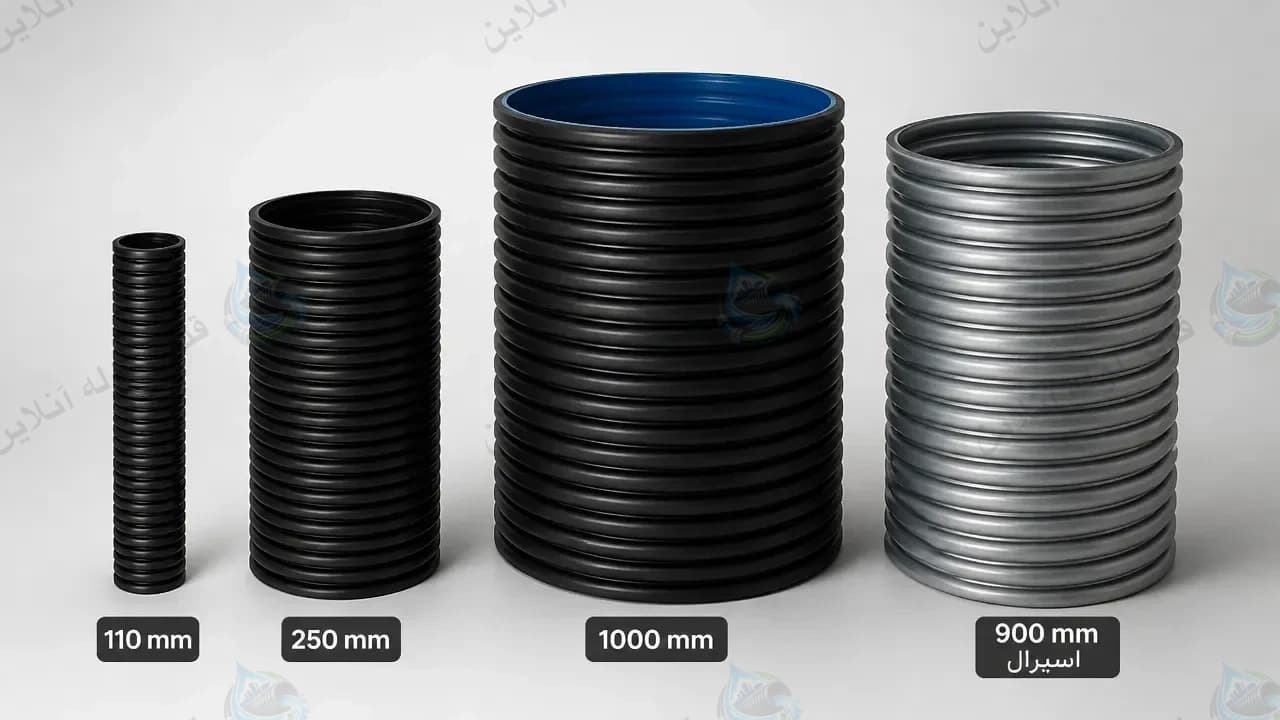
Suppose you are torn between two options for a construction project and do not know which pipe suits your work better. In this comparison of double-wall corrugated pipe and spiral pipe, we focus on the key points: resistance to load, pipe weight, installation speed and cost across the different classes.
Below, we review several selected products from our range one by one, so you can see which type of project each is best suited to. A quick comparison table near the end then lets you put the options side by side and decide more easily.
Whether you are looking for an option for lighter projects or need heavier, industrial-grade models, these sections help you see the practical differences clearly. The aim is that, before buying, you do not just go by the pipe's name but decide based on the real needs of your project.
Products in this article:
- Double-wall corrugated pipe 110
- Double-wall corrugated pipe 250
- Double-wall corrugated pipe 1000
- Spiral pipe 900
- Spiral pipe 2000
- Quick comparison table
<span id="product-154965"></span>
Double-Wall Corrugated Pipe 110: Suited to Small, Low-Cost Projects
The 110 mm double-wall corrugated pipe is the lowest-cost option in this group. It works well when your project is not large and you do not want to move to a heavier model. If you are deciding between this model and the 250 mm double-wall corrugated pipe, this one is the more sensible choice for shorter runs and simpler work. To see the specifications of this model, put the double-wall corrugated pipe 110 next to your other options to make the decision easier.
This pipe is most useful for jobs where the pipe route is limited. For example, if you need to lay pipe for a secondary section, a short branch connection or a small site area, its compact dimensions make the work simpler. Because it fits more easily, installation in tight spaces involves less hassle.
On the other hand, this model suits buyers who want to keep costs under control while still using corrugated pipe. If your project is industrial, long or subject to high loads, you are better off with the larger models. For light, everyday applications, however, this size is a reasonable choice, and there is no need to go for a pipe larger than you actually need.
This model is available in SN4 and SN8 classes and comes with a heat-resistant EPDM seal. So if you want joints to close more cleanly and reliably, be sure to check the required class and joint type with your installer or the project drawings before buying. If your route has several bends and changes of direction, this simple check will prevent problems later.
<span id="product-154961"></span>
Double-Wall Corrugated Pipe 250: Suited to General, Everyday Use
If you need pipe for a local network or everyday work, the 250 mm double-wall corrugated pipe is a reasonable choice. This model sits in the mid range of double-wall corrugated pipes. It is suitable when you want neither the lighter model nor the heavier, specialized options. Its 290 mm outside diameter gives you a clearer picture of the size of the job. This is especially important when the route and installation space are limited from the outset.
The main advantage of this model is its balance between easy handling and flow capacity. If your project is medium-sized, this pipe is a good choice. It is not meant for very difficult routes or very heavy volumes, and this size is usually the easier choice. The EPDM seal also helps make joints cleaner and more reliable. This is particularly important when you want to reduce leaks and the hassle of rework.
Check one point before buying: the SN4 or SN8 class must match the loads and working conditions of your project. If your route is under heavier loads or the surrounding soil is firmer and subject to more traffic, this simple check becomes important. It is also best to coordinate joint locations and the laying space with the project drawings or the installer before finalizing the purchase. This model performs well in general applications, but choosing the wrong class can cause problems later.
<span id="product-154952"></span>
Double-Wall Corrugated Pipe 1000: Suited to Large and Industrial Projects
Double-wall corrugated pipe is made for applications that need a strong pipe wall with less weight than heavier pipes. This model, the 1000 mm double-wall corrugated pipe, is suitable for large routes and industrial work. Its large diameter makes it compatible with more demanding networks. If you want to see its specifications in more detail, compare the double-wall corrugated pipe 1000 against your project's requirements and then decide.
This model is suitable when your route is not just an ordinary site job. For example, in infrastructure projects, water collection or transmission lines that need a larger bore, it is the more sensible choice. The SN4 and SN8 classes also let you choose the more suitable option based on the loads and working conditions. If your project is congested, long or sensitive to precise placement, be sure to coordinate the required class with the drawings and the installer before buying.
In terms of price, this model sits in the upper-middle range. That means its value is clearest when capacity, compatibility with the network and industrial use matter more to you than the lowest-cost option. Compared with smaller models, it is better justified for larger projects, but naturally there is no need for such a diameter for light, short jobs.
The rubber (EPDM) seal is another point you should not overlook. This seal is important for sealing the joints, but it only performs well when it is seated correctly. So when buying, check the socket size, joint type and installation space carefully. If your route has several changes of direction, it is best to coordinate the placement of the pipe with the contractor before ordering. Also take the transport space into account.
<span id="product-154953"></span>
Spiral Pipe 900: High Capacity for Special Requirements
Suppose that for a sewer line or surface-water collection, space for a large pipe is limited but you need high capacity. In such cases, the 900 mm spiral pipe can be a more serious option. This pipe is made for special applications and is close in diameter to industrial pipes.
This model belongs to the spiral pipe family and is available in SN4 and SN8 classes. If your project is a sewer collector, a flood channel or a culvert, this pipe will serve you better. It is designed for applications with high flow volumes where you do not want to move to much larger diameters.
In terms of positioning, it sits in the middle of the group: it is neither in the simple, light range nor at the level of the much larger models. However, its structure differs from corrugated pipe, and that difference makes it suitable for more specific needs. If you are undecided between several options, look more closely at the type of route and the working loads. Do not focus only on the pipe's name. In urban or industrial projects where inlets and outlets must line up precisely, these details become decisive.
Be sure to check one point before buying: this pipe is best for applications where precise installation and alignment with the drawings are clear in advance. If your route has many changes of direction, it is best to coordinate the required class and execution details with the installer. This way you will not be forced to make corrections in the middle of the work.
<span id="product-154946"></span>
Spiral Pipe 2000: Suited to Large, Specialized Projects
The 2000 mm spiral pipe is a large pipe from the spiral family made for heavier-duty work. If your project requires high flow, this pipe is a suitable option. It is also used in main sewer lines, flood channels and culverts. The spiral pipe 2000 was designed from the outset for exactly these applications. This model is available in the SN4 class and is most useful where capacity and flow throughput matter more than purchase cost.
When choosing between the options, this model sits at the top end and is the most expensive of all. For that reason, you usually turn to it when the project is not small and you do not want to have to replace or reinforce the line later due to insufficient capacity. For example, in an urban or industrial project with high water volumes and working loads, choosing a pipe of this size is more sensible than lighter models.
Compared with the 900 mm spiral pipe, this model is intended for broader needs and more demanding routes. The 900 mm spiral pipe is a more balanced choice for lower-volume work, but when you need a larger bore and higher capacity, the 2000 mm comes out ahead. So if your project was designed on a large scale from the start, it is best to consider this model from the outset so you are not limited later.
That said, a large size does not always mean the purchase is simpler. Before ordering, be sure to check the transport space, installation location and alignment with the construction drawings. With large pipes, these simple details are sometimes more important than the choice itself, because if the access route or laying location is not ready, installation becomes harder. If your project involves a sewer collector, flood channel or culvert, assess this model against the dimensions of the installation site and the construction schedule.
<span id="quick-comparison"></span>
Double-Wall Corrugated vs. Spiral Pipe: Quick Comparison Table
| Product | Specifications |
|---|---|
| 110 mm double-wall corrugated pipe | Lowest-cost option for small projects |
| 250 mm double-wall corrugated pipe | Mid-range option for general use |
| 1000 mm double-wall corrugated pipe | Large and industrial projects |
| 900 mm spiral pipe | Mid-range price |
| 2000 mm spiral pipe | Most expensive option for large, specialized projects |
In this comparison of double-wall corrugated and spiral pipe, the main difference lies in price positioning and size. As the diameter increases, your choice moves from more economical models toward more expensive options that make more sense for larger projects. If your work is local, light and budget-driven, go for the smaller diameters. If you need high capacity, long routes or industrial work, consider the larger models.
The simple rule is this: when cost and fast installation matter more to you, the smaller group is the easier choice. But if you want to complete the project with a greater safety margin and need to carry higher volumes, go for the larger diameters.
Which One Should You Choose?
To choose correctly, look first at capacity, then at the installation site, and then at the budget. Many people do the opposite and start with weight or appearance, but if the pipe is too small for your workload, problems will arise later. If the route is short and light, the 110 mm double-wall corrugated pipe and the 250 mm double-wall corrugated pipe are usually the easier choices. If the project is more extensive and you need greater flow through the route, you should consider the 1000 mm double-wall corrugated pipe or the spiral models.
On a project where transport and handling are difficult, take pipe weight seriously. Double-wall corrugated pipes are usually better suited to faster installation and easier handling, especially when the site is busy or labor is short. If the installation route is narrow, winding or hard to access, this lighter weight can make the work much simpler. Conversely, when the project needs a heavier pipe body and more capacity, the 900 mm spiral pipe and the 2000 mm spiral pipe are more useful.
Strength should be assessed alongside the project conditions, not separately from them. If your route is under heavier loads or is meant to operate for a long time, prioritize the models chosen for heavier-duty work. Long service life also matters, but only when you are confident of correct installation and sound joints. A pipe that is not seated properly will still cause problems, even if it suits the project.
When weighting the purchase criteria, this order is usually the most sensible: first capacity, then installation, then strength, and then budget. If the project is small and your budget is limited, the 110 mm or 250 mm double-wall corrugated pipe makes more sense. These pipes are lighter and easier to install. If the project is larger and more sensitive, consider the 1000 mm double-wall corrugated pipe or the spiral models. In these projects, strength and service life matter more than ease of handling. Remember that a cheaper small model is not actually a better choice if it does not meet your needs.
Double-Wall Corrugated vs. Spiral Pipe: Summary and Final Choice
To sum up, your choice depends mostly on the size of the project and the installation space. For small, low-cost jobs, the 110 mm double-wall corrugated pipe is the lighter option. For everyday and general use, the 250 mm double-wall corrugated pipe is more sensible. If you have a larger, more demanding project, you should consider the 1000 mm double-wall corrugated pipe. On the other side, the 900 mm spiral pipe is better suited to special requirements, and the 2000 mm spiral pipe to large, specialized work. In this comparison of double-wall corrugated and spiral pipe, first check the installation site, the route and the required capacity. Once these three points are clear, your choice becomes much easier. You can now review the specifications of each model once more.