 Rubika

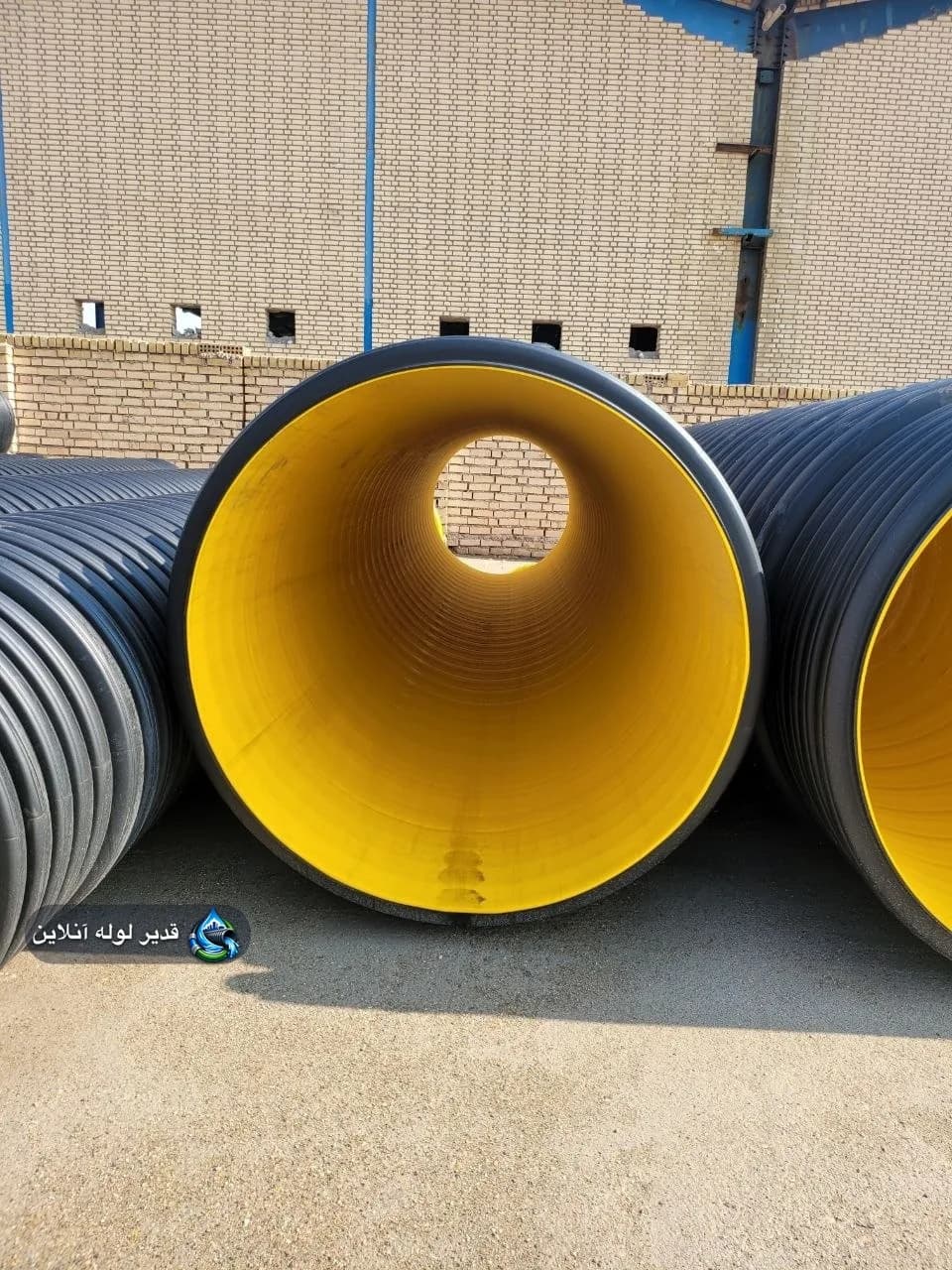
For years, concrete pipe was the default choice for sewer and surface water networks in Iran. Today, in many projects it has given way to polyethylene corrugated pipe, but the question still comes up in design and procurement meetings: corrugated or concrete pipe? In this article we compare the two options technically and economically.
The Basic Difference: Flexible Pipe vs. Rigid Pipe
Concrete pipe is a rigid pipe: it carries soil and traffic loads through the strength of its own wall and hardly deforms; if the load exceeds its capacity, it cracks. Corrugated pipe is a flexible pipe: under load it deforms slightly and transfers the load to the compacted soil around it, so that the pipe and the soil together form one structure. This basic difference explains most of the other differences.
Comparison of Corrugated Pipe and Concrete Pipe
| Criterion | Polyethylene corrugated pipe | Concrete pipe |
|---|---|---|
| Weight | Very light; handled with light machinery, or even by hand in small sizes | Very heavy; requires cranes and heavy machinery |
| Length of each pipe | Longer; fewer joints per kilometer of route | Shorter sections; more joints |
| Corrosion in sewage | Resistant to sewer gases and corrosive compounds | Exposed to corrosion from sewer gases, especially in the crown of the pipe |
| Joint sealing | Coupler and EPDM seal | Depends on joint type and workmanship; risk of leakage and root intrusion at weak joints |
| Inner wall | Smooth; better flow and less sediment | Rougher; becomes even rougher over time and with corrosion |
| Behavior under earthquakes and settlement | Flexible; tolerates limited soil movement | Rigid; cracking and joint separation when soil moves |
| Sensitivity to installation | Bedding quality and compaction of the soil around the pipe are decisive | Bedding quality is important to prevent cracking |
| High groundwater | Because it is light, risk of flotation during installation and need for trench dewatering | Heavy weight, low risk of flotation |
Advantages of Corrugated Pipe over Concrete
1. Faster and Cheaper Installation
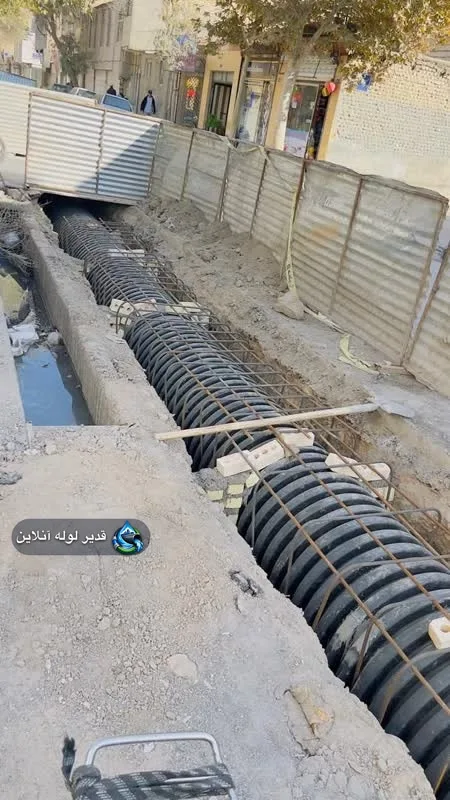
Low weight and longer pipe lengths mean fewer trucks for transport, lighter machinery on site and fewer joints per meter of route. In projects where installation time and machinery costs make up a large part of the budget, this difference is noticeable.
2. Resistance to Sewage Corrosion
In a sewer network, gases released by the decomposition of sewage can turn into acid and gradually eat away the concrete surface; this is one of the main causes of failure in concrete sewer lines. Polyethylene is resistant to these corrosive compounds and does not rust.
3. Better Joint Sealing
The coupler and EPDM seal joint of corrugated pipe prevents sewage from leaking into the soil and groundwater and tree roots from entering the network; groundwater infiltration into the network also needlessly increases the load on the treatment plant.
4. Smoother Flow
The smooth inner wall of corrugated pipe has lower roughness; as a result, it has higher conveyance capacity and less sedimentation than a concrete pipe of the same diameter.
Where Is Concrete Pipe Still the Reasonable Choice?
- Projects where the technical specification or the client explicitly calls for concrete pipe.
- Very large diameters where a local concrete pipe manufacturer with low transport costs is available in the project area.
- Special conditions where the pipe's heavy weight is an advantage in preventing flotation and anchoring a light pipe is difficult.
For diameters larger than corrugated pipe, instead of concrete you can also use polyethylene spiral pipe, which brings the advantages of polyethylene up to a diameter of 2000 mm.
Compare the Total Project Cost, Not Just the Pipe Price
Comparing the price per meter of pipe on its own is misleading. For a correct comparison, put these costs side by side:
- Purchase price of pipes and fittings
- Transport cost to the project site (weight and number of loads)
- Installation machinery and labor, and construction time
- Bedding and backfill materials
- Maintenance, repair and leakage costs over the life of the network
In many sewer and surface water projects up to a diameter of about one meter, the sum of these costs favors corrugated pipe; but the exact figure depends on the conditions of each project.
Conclusion
If you are looking for fast installation, resistance to sewage corrosion and a watertight joint, corrugated pipe is usually the better choice, provided the bedding and soil compaction are carried out correctly (corrugated pipe installation guide). Concrete pipe still has its place in special conditions and when the technical specification calls for it.
Ghadir Louleh Pasargad double-wall corrugated pipe is supplied in sizes 110 to 1200 mm and in classes SN4 and SN8: sizes and today's price. To compare costs on your own project, enter your route specifications in the project inquiry form.