 Rubika

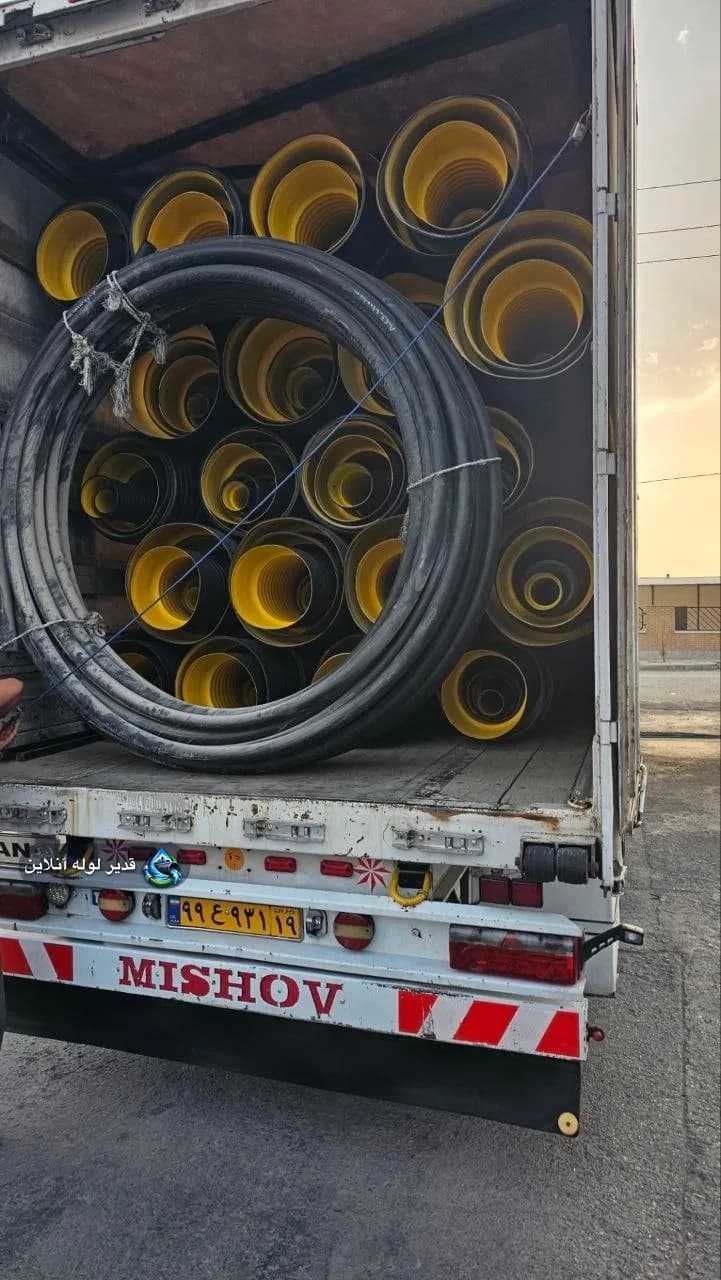
Corrugated pipe is light and tough, but much of the damage seen on projects happens before installation rather than in the ground: impacts during unloading, dragging along the ground, poor stockpiling or incorrect storage of the seals. In this guide we go through the essentials of transporting and storing corrugated pipe, from loading at the factory to the moment of installation.
Loading and transport
- Truck bed and sides: the load bed must be flat and free of nails, protruding bolts and sharp edges; cover any sharp edges with timber or rubber.
- Securing the load: strap the pipes with wide fabric straps, not chains or steel wire, which damage the pipe wall. Do not tighten the straps so much that the pipe goes oval.
- Orientation of coupler ends: if the pipes have a coupler on one end, alternate the ends so the pipes do not rest on the couplers and the load bears evenly.
- Overhang beyond the bed: keep the length of pipe hanging beyond the trailer bed limited so it does not whip and break over bumps.
Ghadir Louleh Pasargad pipes are shipped by truck and trailer from the factory warehouse in Garmsar Industrial Park to anywhere in Iran; see examples of loading on the factory page.
Unloading on site
- Do not throw pipes off the truck or drag them along the ground; impacts and abrasion damage the corrugations and pipe ends.
- Unload small sizes by hand and large sizes with a crane or forklift and fabric slings; do not use metal hooks inside the pipe or chains.
- Lift long pipes from two points so they do not bend in the middle.
- When working with a crane, nobody should stand under the load or in the swing path of the pipe.
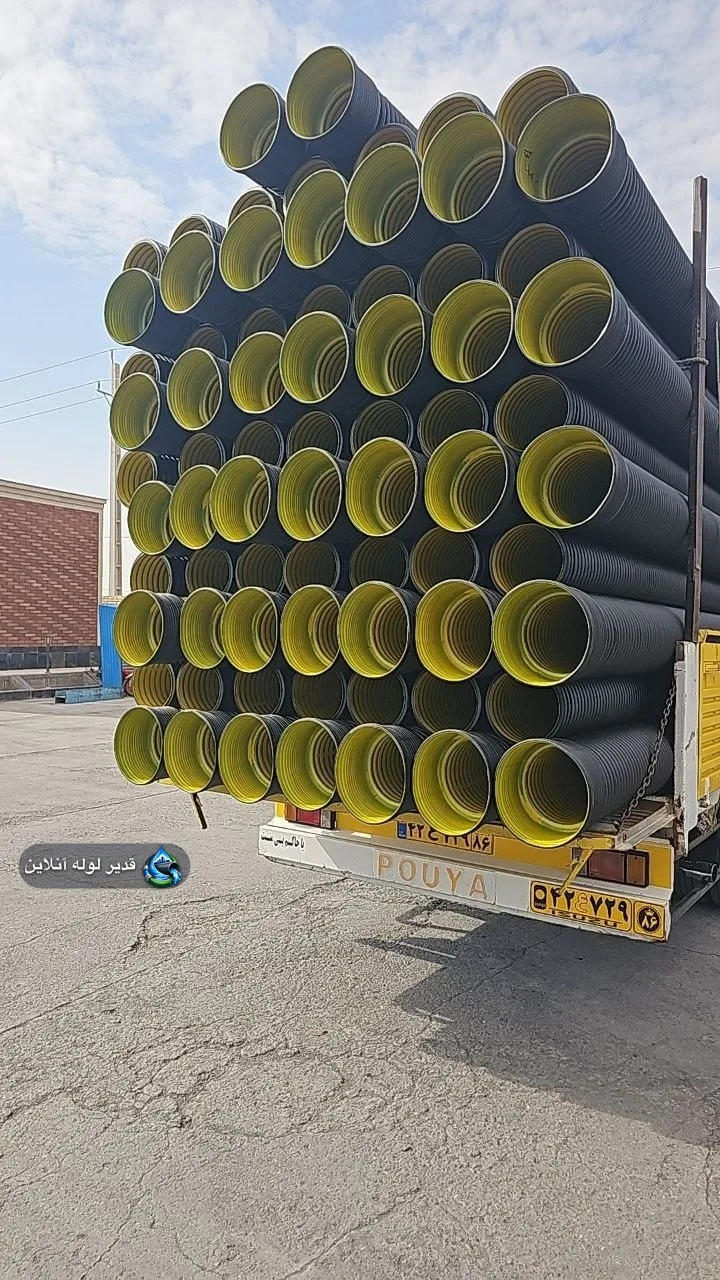
Stockpiling pipe on site
- Flat, clean ground: clear the storage area of stones, scrap metal and sharp objects, and lay the pipes on evenly spaced timber bearers rather than directly on uneven ground.
- Limited stack height: keep stacks low so the bottom pipes do not deform under the weight of the others; the larger the diameter, the fewer the tiers. If the manufacturer specifies a limit, follow it.
- Side restraint: chock both sides of the stacks with wedges or stakes so the pipes do not roll.
- Coupler ends: if the pipes have a coupler on one end, alternate the ends as you would for transport.
- Close to the installation point: stockpile the pipes as close to the trench as possible to reduce re-handling, but outside the zone where the trench edge may collapse.
- Away from fire and welding: polyethylene is flammable; keep pipes away from welding and cutting sparks and open flames.
Sunlight and long-term storage
The black outer wall of standard corrugated pipe contains carbon black, which protects it against the sun's ultraviolet radiation (this is one of the pipe's quality tests; see Corrugated pipe standard). Even so, if the pipes are going to stay on site for a long time, covering them with a light-coloured, ventilated tarpaulin or storing them in the shade is best.
Storing EPDM seals and fittings
- Keep the seals in their original packaging in a dry, shaded place until installation.
- Keep the seals away from oil, diesel, grease and solvents; these substances damage EPDM rubber.
- Do not hang the seals or put heavy loads on them, so they do not deform permanently.
- Keep the fittings (couplers, elbows, tees) in bags or boxes so their ends do not get dirty or damaged. The fitting types are listed on the corrugated pipe fittings page.
Checking the delivery
- Check the number of lengths, the sizes, the stiffness class (SN4 or SN8) and the number of fittings and seals against the pro forma invoice.
- Check the markings printed on the pipe (manufacturer, size, class, standard).
- Inspect the pipe body, corrugations and ends for cracks, dents and ovality, and photograph and report any damage to the seller before unloading is complete.
- Stockpile damaged pipe separately so it is not installed by mistake.
Before installation
Just before laying, clean the inside of the pipe and the corrugation valleys at the pipe end of soil and sand, and take the seal out of its packaging only when making the joint. We cover the full installation steps in the corrugated pipe installation guide, and how transport cost is calculated alongside the pipe price in Calculating corrugated pipe prices.