 Rubika

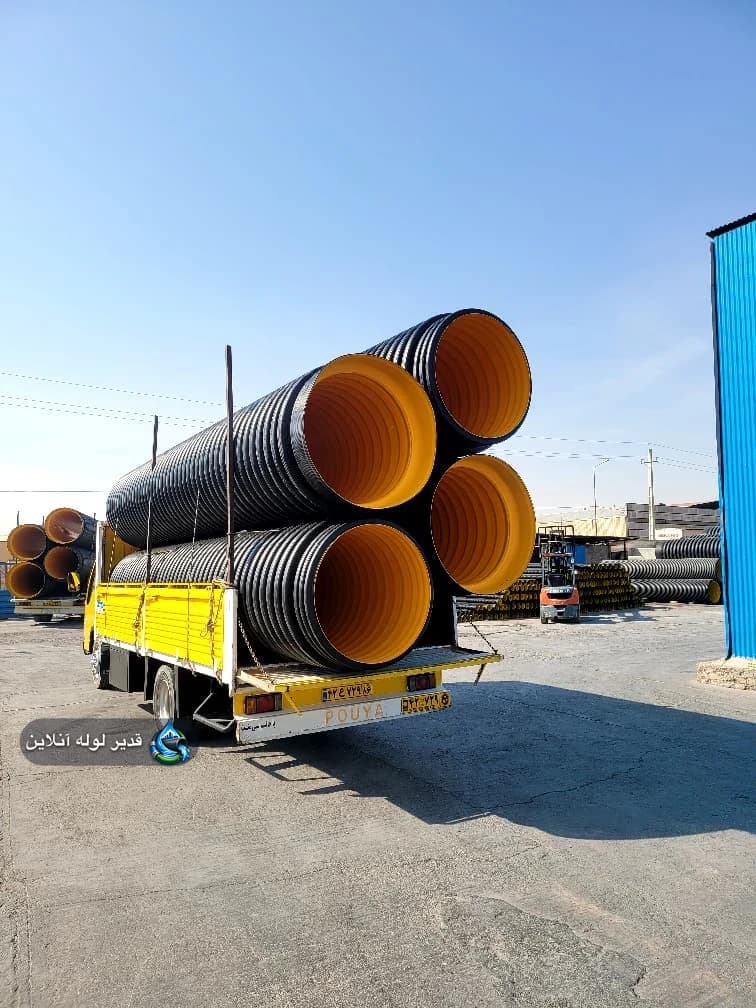
Why Is Corrugated Pipe So Popular for Urban Sewerage?
Introduction
When an urban sewer network faces high flow volumes, ground settlement and site constraints, choosing the pipe material is not just a purchasing decision; it is part of the durability of the entire project. Corrugated pipe is a double-wall pipe with a corrugated outer surface and a smooth inner surface, used to convey sewage and surface water in urban projects. This structure has drawn the attention of engineers and contractors for routes that require mechanical strength, reliable installation and stable performance. In this article we examine why corrugated pipe has become so popular for urban sewerage and which characteristics have made it an important option in the design and construction of these networks.
Advantages of Corrugated Pipe
Lightweight and Corrosion-Resistant
One of the main reasons for the popularity of corrugated pipe in urban sewer networks is its low weight combined with high strength. This makes it easier to transport the pipes on site, and moving them along long routes or busy streets takes less time and labor. For projects where speed of execution matters, this difference in the transport and positioning stage has a noticeable effect on work scheduling.
On the other hand, urban sewage is not only about mechanical pressure; there is also constant exposure to moisture, corrosive substances and changing environmental conditions. Owing to its structure and material, corrugated pipe performs well against corrosion, which is a significant advantage compared with pipes that are more sensitive to chemical environments. As a result, engineers can use it with greater confidence for long underground routes.
Flexibility and Easy Installation
The flexibility of corrugated pipe is not just a technical property on paper; in a real project, it helps the pipe route adapt better to ground conditions. When the route has slopes, minor level changes or site constraints, a pipe that can adapt better to these conditions reduces installation problems. As a result, contractors face fewer stoppages and fewer corrections during construction.
Installing these pipes also usually requires less labor and lighter equipment. If workspace on an urban street is limited and there is little room to maneuver heavy machinery, low weight and good jointing make the project easier to carry out. This also has a direct effect on project scheduling and on reducing disruption to urban traffic.
Lower Maintenance and Repair Costs
When a sewer network is continuously exposed to moisture, sediment and environmental pressures, the main cost is not only the initial installation; maintenance over the service life becomes more important. Thanks to its good corrosion resistance and durability under urban operating conditions, corrugated pipe usually requires fewer repeated interventions. This means fewer costly inspections, premature replacements and recurring failures.
For example, in a section of the network that is hard to access, every excavation and repair can cause considerable cost and disruption. If the pipe was chosen for such conditions from the outset, the likelihood of sudden repairs drops and the network continues operating with fewer interruptions. This reduction in interventions is an important economic advantage in urban projects.
Environmentally Friendly and Water-Efficient
Choosing the right pipe is not just a structural decision; in urban projects its impact on the environment and resource efficiency also matters. With higher durability and less need for replacement, corrugated pipe helps reduce material consumption and the volume of waste generated by repairs. In addition, when the sewage conveyance network operates with fewer leaks and failures, water and wastewater management becomes more orderly and unnecessary losses are avoided.
In projects with a long-term perspective, these characteristics become even more valuable. A network that suffers less damage and leakage places less additional load on the collection and treatment system, and its maintenance requires fewer operational resources. For this reason, corrugated pipe can be considered a defensible choice for urban sewerage both technically and in terms of environmental sustainability.
In this context, corrugated pipe is seen as a practical solution for urban projects, because it both simplifies construction and places less strain on the network and resources over long-term operation.
Comparing Corrugated Pipe with Other Pipes
Comparison with PVC Pipes
PVC pipes are used in many sewage collection networks because of their smooth inner surface, low weight and relatively easy installation. However, their solid structure and uniform wall differ from the structural behavior of corrugated pipe. Because of its corrugated outer wall, corrugated pipe behaves differently under external loads, and on routes where soil pressure and surface traffic matter, it appears to be the more engineered choice.
By contrast, PVC usually has the advantage in projects with smaller diameters, fast installation and low-stress environments. But if the soil bed is not uniform or there is a risk of settlement and localized loading, it becomes more sensitive to installation conditions. In such situations, bedding quality and careful sealing play a more decisive role for PVC.
In terms of cost, the comparison is not limited to the purchase price either. PVC may have an acceptable initial cost in some projects, but on urban routes with greater burial depth or heavy loads, the need for construction care and tighter control can raise the total project cost. Corrugated pipe, with its more suitable structural behavior, strikes a better balance between installation cost and performance in many of these conditions.
Comparison with Steel Pipes
Steel pipes have a well-known place in terms of mechanical strength and resistance to special conditions, but for urban sewerage they are not always an economical or practical option. Steel requires additional coatings and care to resist corrosion, especially in the humid and corrosive environment of sewage. This both increases maintenance costs and raises the risk of performance loss over the long term.
Structurally, steel is rigid and strong, but this same property makes it difficult to install in urban networks. Higher weight, difficult handling and the need for more construction equipment slow the project down. On some routes, this increases not only time but also labor and machinery costs.
In comparison, corrugated pipe is a more balanced choice for projects whose main goal is sewage collection at a reasonable cost and with controllable installation. For example, on an urban route that must run beneath busy streets, steel may be structurally suitable, but the cost of corrosion protection and the difficulty of installation can take it out of contention. In such conditions, corrugated pipe, with its lower weight, easier transport and adequate resistance to external loads, is a more practical option.
Advantages of Corrugated Pipe over Other Pipe Types
The main advantage of corrugated pipe is that it meets two important needs of an urban sewer network at the same time: mechanical resistance to external loads and ease of installation. This allows the contractor to plan more reliably on long routes, in changing soil conditions and with site constraints. Compared with some rigid pipes, corrugated pipe shows greater flexibility in adapting to the installation bed.
In terms of performance, this pipe has the edge in projects with surface loads, possible settlement or limited access. By contrast, pipes chosen solely on the strength of their raw material may create more hidden costs during installation or operation. For this reason, technical analysis for urban sewerage must go beyond nominal strength and also consider the pipe's behavior in the soil, the jointing method and the quality of installation.
Economically, corrugated pipe usually comes out ahead when the project is carried out in complex urban settings, that is, where installation speed, reduced risk of damage in transport and less need for heavy equipment matter. If a pipe is cheaper to buy but imposes higher costs during installation, maintenance or later repairs, it is not a suitable choice for an urban network. This is exactly where corrugated pipe has the advantage: a balance between initial cost, structural performance and constructability under different conditions.
Applications of Corrugated Pipe in Urban Sewerage
Use in Sewage Collection Systems
Corrugated pipe is most effective in urban sewage collection networks when the route is long, the bedding soil varies considerably or the network is subject to loads from urban traffic. In such conditions, this pipe is a practical choice for main transmission lines, branch lines and routes that need to carry loads and remain stable.
The use of corrugated pipe is common in dense residential areas, developing neighborhoods, city outskirts and even routes that run alongside busy streets or beneath roadways. The main reason for this choice is its ability to cope with changing site conditions and to reduce the risk of damage during operation. For example, in an urban sewage collection project where the pipeline must pass beneath a main road and several side intersections, this type of pipe can make the route installation more orderly and controllable.
Use in Infrastructure Projects
In urban infrastructure projects, corrugated pipe is not used only to convey domestic sewage; it also plays an important role in networks that serve the city's future development. This pipe is widely used in development plans for new neighborhoods, the renovation of old networks, the creation of branch routes and the construction of transmission lines on land with varying soil conditions.
Experience from many urban projects has shown that using corrugated pipe in such schemes improves coordination between design and construction. In projects where construction time is limited and routes must be built with minimal disruption to traffic or urban activity, choosing a pipe that is quicker to install and easier to manage becomes very important. This is why contractors pay particular attention to it in infrastructure projects.
The Role of Corrugated Pipe in Improving Sewer Systems
The effect of corrugated pipe on sewage quality is seen more at the level of network performance than in the fluid itself. When the conveyance route is more stable and the joints and pipe body perform better against settlement or environmental damage, the likelihood of leakage, soil ingress and flow disruption decreases. The result is more uniform flow and fewer of the problems that typically lead to blockages, sewage backflow or contamination of the surroundings of the route.
In an urban network, this stability can tangibly improve operating quality, because sewage moves along a more controlled path and the need for emergency interventions decreases. Also, in projects aimed at upgrading a worn-out network, replacing vulnerable sections with corrugated pipe can help reduce critical points and make the overall system perform more consistently. For this reason, this pipe is not just a construction option but part of the technical solution for upgrading urban sewer networks.
Installation and Maintenance Tips for Corrugated Pipe
Correct Installation Methods
Proper installation of corrugated pipe is not just a construction step; it directly affects sealing, load-bearing capacity and network performance in the years that follow. If the bed is not properly prepared or the gradient is not set accurately, even a pipe with a suitable material and structure can suffer localized settlement, changes in the flow path or asymmetric pressure.
In correct installation, the trench bottom must first be uniform and compacted so the pipe sits on a stable surface. Next, level control, gradient setting and layer-by-layer backfilling are very important, because poor compaction of the soil around the pipe transfers traffic loads unevenly. For example, on an urban route where heavy vehicles are expected, if the soil compaction at the sides of the pipe is insufficient, the top of the pipe is subjected to greater pressure and the likelihood of localized deformation increases.
Joints must also be made carefully. Any misalignment at a joint in an urban sewer network will over time lead to leakage or the ingress of fine soil particles, which reduces the efficiency of the entire line.
Installation Safety Tips
Observing safety during installation prevents injury to workers as well as damage to the pipe itself. Deep trenches, mechanical equipment and the handling of long components each carry their own risks and must be controlled through planning.
Before lowering the pipe, the route must be checked for obstructions, trench wall collapse and interference with underground utilities. Using appropriate lifting and handling tools prevents point loads and scratches on the pipe body. In addition, when work is carried out in confined spaces, the presence of trained personnel and continuous supervision become even more important.
If installation takes place during rainfall or in saturated soil, the likelihood of bed slippage and loss of level increases. In such conditions, temporarily stopping work and correcting the bed is usually better than continuing installation at high risk.
Post-Installation Maintenance and Servicing
Maintaining corrugated pipe after installation requires regular, periodic inspection more than anything complicated. The first point is to check for ground settlement along the route, because surface changes can indicate a problem with the subgrade or soil compaction. Next, inspecting joints and access covers helps detect any leakage or blockage earlier.
Periodic flushing of the network, especially at points where more sediment accumulates, prevents the build-up of solids and a reduction in flow capacity. If this servicing is not done in time, hydraulic pressure rises in some sections and the network enters the repair phase sooner than expected.
Regular maintenance directly extends the service life of the pipe, because it prevents gradual erosion, abnormal pressures and cascading failures. In practice, a network that is monitored periodically needs less re-excavation, component replacement and service interruption, which also keeps long-term costs under control.
Quality Certificates for Corrugated Pipe
The Importance of Quality Certificates
When buying corrugated pipe, a quality certificate is not just an administrative document; it is a sign that the product has been manufactured, tested and controlled within a defined framework. For urban sewer projects, this directly affects construction and operating risk, because a pipe of inconsistent quality can cause problems during installation or after commissioning.
Contractors and clients usually have two main concerns: consistent quality throughout the project and assurance that the pipe will deliver the expected performance under real working conditions. Checking certificates before purchase helps clarify the origin of production, the quality control process and the product's compliance with project requirements. In practice, this check can prevent the purchase of a pipe that looks suitable but does not perform as required in technical tests or under installation conditions.
Recognized Standards
When evaluating corrugated pipe, you should look to standards and bodies that are recognized in the fields of polymer materials, sewer networks and product quality control. National and international standards for sewer pipes provide a framework for assessing characteristics such as manufacturing consistency, mechanical strength, inner surface quality and jointability. These frameworks ensure that comparisons between different products are not based solely on appearance or the seller's claims.
Recognized certification bodies are usually laboratories, standards organizations and conformity assessment bodies that examine the product according to defined tests. When a manufacturer can provide valid documentation, the buyer can more easily be sure that the pipe meets project requirements during installation. For example, in an urban sewer project, if two products are close in price but one has clear and traceable quality control documentation, the technical choice usually leans towards that product.
How Certificates Affect Choosing the Right Pipe
Pipe quality does not stop at the factory gate; it is this quality that affects the durability of the network, the stability of the joints and the reduced likelihood of failure during operation. A pipe produced with proper quality control behaves more reliably under the pressures of backfilling, surface traffic and changing environmental conditions.
Valid certificates help engineers make a more precise choice between options that look similar in name and appearance. For example, on an urban route where later repairs would be difficult and expensive, buying a pipe with clear technical documentation is more sensible than choosing a product offered solely on the basis of a lower price. In such a project, higher quality means a lower likelihood of leakage, localized settlement and operational disruption.
For this reason, checking certificates should be part of the selection process, not a formality after the purchase decision. When pipe quality is documented and verifiable, the engineering decision becomes more confident and the result of the installation more dependable.
Conclusion
In urban sewerage, choosing corrugated pipe is not just an ordinary purchase; it is a decision that directly affects network durability, installation quality and maintenance costs. When a pipe is not of an adequate standard in terms of manufacture and quality, the risk of settlement, damage and performance disruption rises during installation or operation. For this reason, paying attention to pipe quality is as important as choosing its diameter and technical class.
If the goal is to build a stable, low-maintenance network, you should choose pipes that perform reliably under the project's conditions and environmental pressures. In this regard, high-quality corrugated pipe can be the choice that gives both the contractor and the client greater peace of mind.
Along these lines, Ghadir Louleh Online's services in pipe and fittings supply can meet project needs in a targeted way. ghadirlouleonline.com, with its focus on supplying high-quality corrugated pipe at a competitive price, paves the way for a more precise choice that better matches the project's technical needs. If you are looking for a reliable supplier for an urban sewer project, reviewing this company's options can be a good starting point.