 Rubika

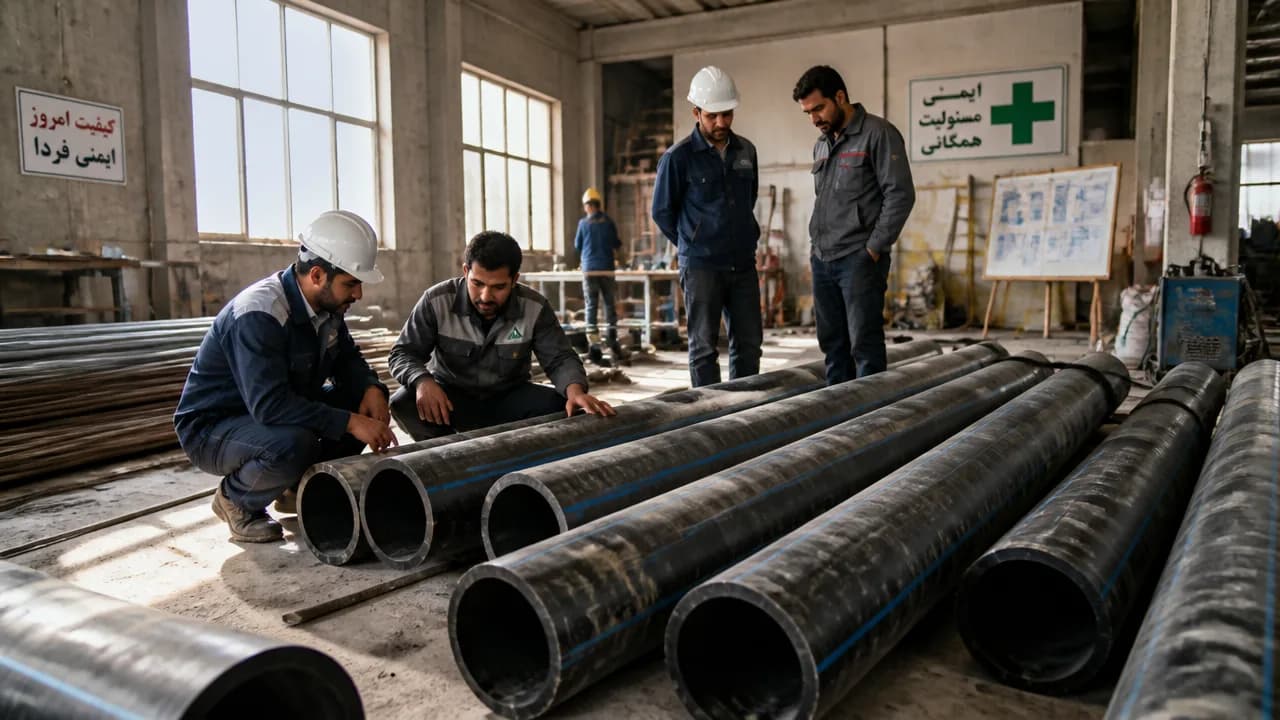
Polyethylene pipe is one of the most widely used options for conveying water and sewage, for irrigation and for utility networks, because it performs acceptably in damp conditions and in many working conditions. But when the build quality is poor, these same advantages quickly turn into trouble: leaks at the joints, poor performance on site and extra costs for repair or replacement.
For contractors and building engineers, choosing the right pipe is not just a simple purchase; it is part of the project's reliability. If the pipe is made from substandard materials or does not meet the required standard, it affects the entire system. Below, you will learn the signs of poor-quality polyethylene pipe so that you can identify common faults more quickly before buying or installing.
Introduction to polyethylene pipe
History and applications of polyethylene pipe
Polyethylene pipe entered the industry when the need for a lighter, more flexible and more durable replacement for metal and concrete pipes became pressing. With the development of polymers, these pipes gradually moved from limited applications to widespread use in urban, industrial and building projects, and today they have a permanent place in various areas of building services.
In building projects, these pipes are used for water conveyance, irrigation, branch networks and some utility routes. In industry, too, they are a common choice for moving fluids that need a durable, low-maintenance pipe. For example, in a large landscaping project, using polyethylene pipe makes the irrigation route easier to install and leaves fewer fittings exposed to damage. If you want to learn more about the structure and types of this product, polyethylene pipe is a good starting point for a closer look.
Advantages of using polyethylene pipe
One of the most important advantages of these pipes is their light weight. This makes transport simpler and speeds up the work on site. In projects where installation time matters, this alone can reduce the pressure on site and speed up progress.
In terms of performance, polyethylene pipe is also more resistant than metal pipe to corrosion, rust and many environmental conditions. This resistance means less maintenance trouble on routes where the soil is damp or there is a chance of continuous contact with water. Its good flexibility on routes with bends or changes of direction also reduces the need for extra fittings; and the fewer the joints, the fewer the potential leak points.
Economically, too, these pipes are not just about the purchase price. Lower installation costs, less need for repairs and good durability with correct use together make them a cost-effective choice for many contractors. For this reason, when the build quality is good, polyethylene pipe can be a more practical option than many alternatives, both during installation and in operation.
Methods for assessing polyethylene pipe quality
Visual methods for assessing quality
The first check for identifying the signs of poor-quality polyethylene pipe starts with simply looking and touching. The pipe's color should be uniform, and uneven patches, scattered dark spots or an abnormal glossiness on the surface may indicate improper mixing of the materials or a poor production process. A pipe whose appearance is inconsistent from the start usually does not inspire enough confidence in its performance either.
Examine the outer and inner surfaces of the pipe carefully. Noticeable roughness, dents, a wavy surface or deep scratches call the build quality into question. Irregular cut edges, non-uniform wall thickness along the pipe and irregularities at the ends are also signs that should not be ignored.
For example, if you lay several lengths of pipe from one shipment side by side and see that one of them is duller than the others or does not have as smooth a surface, it is best to examine that length more closely. This visual difference sometimes comes down to differences in raw materials or poor production control.
Besides the appearance, also read the markings printed on the body. Missing information, faded printing or specifications that do not match the order can be an important warning. A quality pipe usually has legible and orderly identification markings, which helps a great deal in purchase control.
Non-destructive and destructive tests
For greater confidence, a visual check is not enough, and physical and chemical tests are needed. In non-destructive tests, the pipe is evaluated without being damaged; for example, checking dimensions, wall thickness, uniformity of construction and the pipe's response to standard laboratory pressures. These checks help reveal the real difference between a standard pipe and a poor sample.
Chemical tests are also important for understanding the quality of the raw materials. These tests show whether the material composition is compatible with the project's needs and whether there is a likelihood that unsuitable materials, or recycled material beyond the permitted limits, have been used. For contractors, the result of this stage is not just a laboratory figure; it is an indication of how the pipe will behave under real working conditions.
In some cases, destructive tests are also necessary; that is, part of the sample is subjected to controlled pressure, tension or temperature to measure its strength. If the pipe deforms or cracks sooner than expected in these tests, using it in the project carries a high risk.
The key point in choosing a quality pipe is not to rely only on appearance or price. Ask the seller for the technical specifications, check the sample for body uniformity and markings, and in sensitive projects, demand the result of a valid test. A pipe that has an acceptable appearance, provides clear technical information and performs well in tests is a safer choice for installation.
Factors affecting polyethylene pipe quality
Raw materials and production process
The quality of polyethylene pipe starts with the raw materials. If the granules or input compound are not uniform, the pipe may look sound, but it will not behave reliably under pressure, impact or temperature changes. For the contractor and engineer, this means a risk that is not visible at the time of purchase but shows itself during operation.
The production process is just as important. If the extrusion temperature, production speed, calibration and cooling are not properly controlled, the pipe surface, wall thickness and uniformity suffer. A pipe that is thicker in one section and thinner in another is in practice not standard or uniform, even if it looks fine from a distance. The factory's quality control should identify these inconsistencies before the product leaves the production line, rather than passing the responsibility on to the site or the project.
For example, consider two pipes that look similar: one made with consistent raw materials and controlled production, the other with substandard materials and poor supervision. Both may seem acceptable at the moment of purchase, but the second pipe will show signs of weakness sooner during installation, testing or operation.
Storage and transport conditions
Even a pipe produced with suitable materials loses some of its quality if it is not stored properly. Direct sunlight, improper storage, placement on uneven surfaces or contact with sharp objects can make the pipe surface vulnerable. This damage is not always obvious, but it later causes problems during installation or under operating pressure.
Care is also important during transport. If pipes are moved without proper restraint or stacked under heavy pressure, the likelihood of scratches, crushing and deformation increases. In construction projects, these seemingly minor damages sometimes cause trouble when the pipe is jointed or during the final test.
The best practice is to store pipes on a flat surface, away from sharp edges and stacked properly. Also, during unloading and loading, dragging or throwing them should be avoided. If these steps are not taken seriously, even a good product will in practice become a low-quality pipe.
Problems caused by poor-quality pipe
Defects in pipe performance and service life
When polyethylene pipe does not have the required quality, the problem is not limited to its appearance; it affects the performance of the system from the very start of operation. A pipe that lacks suitable raw materials, or whose production process did not maintain uniformity, does not behave predictably under pressure, impact or environmental changes. In such conditions, localized leaks, premature cracking, deformation at the joints and a decline in network efficiency gradually appear.
For the contractor, this means that a project that should be handed over with confidence enters the troubleshooting phase sooner than expected. On a building site, if the pipe on a buried route does not have sufficient strength, parts of the route may become crushed or leak after backfilling and loading. The result is not just a technical fault; it also means reopening the route, halting the work of other teams and causing employer dissatisfaction.
Experience from many projects shows that the signs of poor-quality polyethylene pipe are not always visible on day one. Sometimes the pipe looks sound, but after a few weeks or months it shows its weakness at welds, fittings or points under greater stress. This delay in the problem appearing makes initial diagnosis harder and the final damage greater.
Additional repair costs
Poor-quality pipe does not just have a lower purchase cost; its real cost usually becomes apparent after installation. Every leak, crack or interruption of the line requires labor, tools, time and materials all over again. If the pipe is buried in part of the building or site, repairing it involves demolition, clearing up and rebuilding; in other words, a multi-layered cost that is not visible in the initial estimate.
These hidden costs are very troublesome for building projects. For example, in an internal water supply network, a small defect in the pipe can lead to damp, damaged finishes or harm to adjacent areas. In such a situation, the repair cost is not limited to replacing that part, and paint, plaster, flooring or even part of the adjacent services may have to be redone.
On the other hand, every stoppage for repairs pushes back the project delivery date. For the contractor, this delay means more pressure from the employer, re-coordinating with teams and sometimes paying extra costs to speed up the work. That is why choosing a cheap but poor-quality pipe can in practice turn from an economical purchase into a costly decision.
In many projects, the main problem is not the failure itself but the accumulation of small failures. Every minor leak, every extra site visit and every local fix consumes part of the project's budget and time. For this reason, identifying the signs of poor-quality polyethylene pipe in good time is not just a technical task, but a way to control hidden costs and keep the project's execution on track.
Required standards for pipes
National and international standards
To identify standard polyethylene pipe, the first step is to check its compliance with recognized standards. In construction projects, the appearance of the pipe or the manufacturer's name alone is not enough; it must be clear according to which criteria the product was made. A pipe that does not meet a standard may place the joints under stress at the actual working pressure, or may not perform reliably against impact and temperature changes.
In practice, standards help you know whether the pipe meets the minimum requirements in terms of raw materials, wall uniformity, quality control and marking. For a contractor or engineer, this means a lower risk of premature failure, leaks and rework.
A simple example: if several lengths of pipe that look alike are procured for a water supply or fluid conveyance line, but only one of them has correct markings, technical specifications and the necessary approvals, the product without identification can later become the weak point of the network, especially where access for repair is difficult.
The importance of complying with standards when choosing pipe
Complying with standards is not just an administrative matter; it directly affects service life and maintenance cost. A pipe produced in accordance with the standard behaves more predictably during installation, and jointing it with suitable fittings is more reliable. In contrast, a poor-quality pipe may cause trouble even during installation; for example, because of ovality, irregular wall thickness or an unsuitable surface, the weld or joint may not form properly.
On the other hand, standards help you see future problems before they occur. When a product has clear specifications, choosing it for sensitive projects makes the path clearer and lowers the likelihood of premature replacement or interruption of operation. For this reason, when buying pipe you should not rely only on price or immediate availability.
When choosing a supplier, also take a few key points seriously: transparency in technical specifications, the ability to provide valid documents, the product's real match with the project's needs, and responsiveness about the type of application. If a supplier only emphasizes the sale and gives no clear explanation about the standard, product traceability or its suitability for the working conditions, it is best to decide with more care.
Along these lines, ghadirlouleonline.ir, with its focus on supplying industrial pipes and fittings, can be useful for reviewing standard options suited to the project's needs. If you want to assess pipes more precisely against the necessary criteria before buying, contacting this company and getting advice can make your choice more reliable.
Conclusion
In conclusion, the signs of poor-quality polyethylene pipe should be seen in a few main areas: irregular appearance, low-quality raw materials, non-uniform surface and wall thickness, and the lack of reliable technical specifications. Each of these can cause serious trouble for the project during installation or in the operating period, from reduced durability to an increased likelihood of damage and rework costs.
For contractors and engineers facing high workloads and time constraints, choosing pipe based on price alone carries a high risk. A pipe without proper build quality and standard compliance may not look very different from good samples, but in practice it can affect the performance of the whole system. For this reason, attention to quality and standards is not a secondary step; it is part of the project's technical decision-making.
When buying polyethylene pipe, it is best to turn to reliable sources and trustworthy sellers, where product specifications, product authenticity and technical information are presented transparently. This simple care reduces the likelihood of a wrong choice and helps you procure a pipe that matches the project's real needs, not merely a cheap and unreliable product.