 Rubika

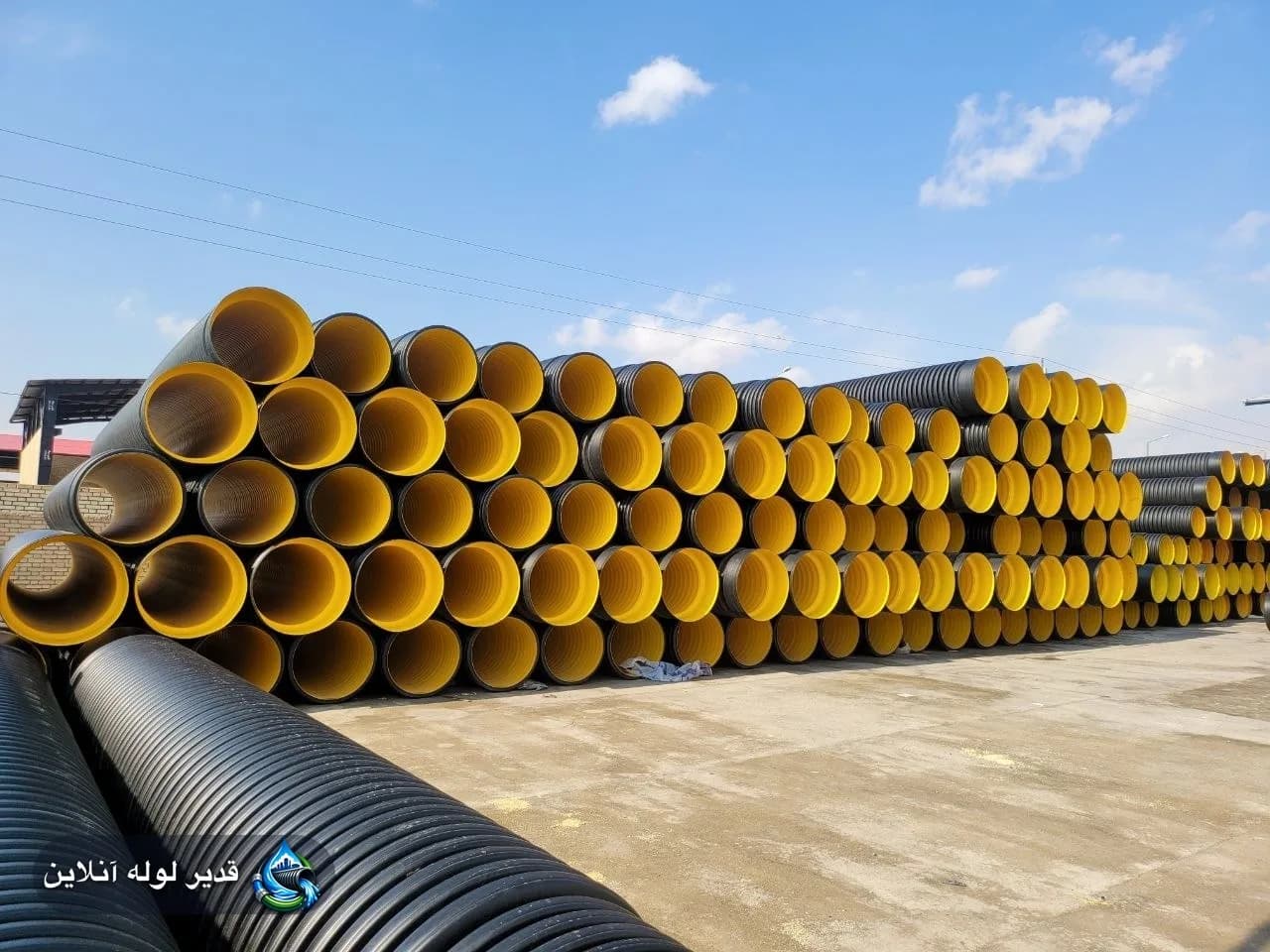
The story of the corrugated pipe began with a simple need: how can you make a pipe that is light, withstands soil pressure and the weight of vehicles, costs less and is also easier to install? Interestingly, the roots of this idea go back to a cardboard box.
1. What Did People Do Before Corrugated Pipe Was Invented?
In the past, the following were mostly used for conveying water and draining land:
- Clay and earthenware pipes
- Stone and brick channels
- Metal pipes
- Concrete sections
These systems had problems: high weight, difficult transport, high installation costs and, in some cases, breakage or corrosion. Farmers in particular needed to drain excess water from agricultural land so that plant roots would not be damaged.
2. The Original Spark of Invention: 1896
In 1896 in the US state of Indiana, two men named James Watson and Stanley Simpson were looking for a way to build lighter and more economical drainage structures. Their idea came from observing the corrugated cardboard boxes used for shipping goods.
They realized that a corrugated surface, compared with a flat sheet, can provide greater strength for the same amount of material. So they transferred this idea to sheet metal:
If we corrugate sheet metal and form it into a cylinder, we can make a pipe that is light yet strong.
In 1896 they applied for a patent for corrugated metal pipe, one of the turning points in the history of corrugated pipes.
3. Why Were the Corrugations So Important?
This is where the real engineering ingenuity came in. Engineers understood that the corrugations do not just change the appearance of the pipe; they also change its structural behavior.
A corrugated surface gives the wall greater resistance to deformation. Of course, the actual strength also depends on the thickness, corrugation geometry, material, diameter and installation conditions. In fact, instead of getting all the strength from the sheet thickness, they also drew on the geometric shape of the wall, the same philosophy that later became very important in plastic corrugated pipes as well.
4. Plastic Enters the Story: the 1960s
About half a century later, the petrochemical industry made great progress. Polyethylene, known since 1933, became a suitable material for pipe production with the development of new HDPE grades in the early 1950s.
In the 1960s engineers began to think: what would happen if we could combine the same advantage of corrugated geometry with polyethylene? The result was corrugated plastic pipes for draining agricultural land.
According to the history of the Plastics Pipe Institute (PPI) in the US:
- Around 1960, samples of corrugated plastic pipe were produced for land drainage.
- In 1967, the first commercial production of polyethylene corrugated pipe was recorded in the US.
- The initial product had a diameter of 100 mm.
- The aim was to replace short clay pipes that were difficult to install.
5. Why Did Farmers Embrace It So Quickly?
Because it had a major economic advantage:
- The pipe lengths were longer.
- It weighed less.
- Transport was easier.
- Installation with machinery was faster.
- It had good resistance to corrosion and many soil chemicals.
In fact, the main job of these pipes at first was not conveying municipal sewage, but removing excess water from beneath agricultural land.
6. From Farmland to Major Civil Engineering Projects
In the late 1980s, larger-diameter polyethylene corrugated pipes entered the stormwater drainage market and gradually replaced some of the metal and concrete pipes. Later their applications expanded:
- Stormwater collection networks
- Road and highway drainage
- Gravity sewer networks
- Industrial projects
- Urban runoff management
- Drainage of sports fields and agricultural land
7. The Birth of the Double-Wall Pipe: the Product We Know Today
With advances in extrusion technology, engineers arrived at a structure made up of two different surfaces:
- Corrugated outer wall: to provide structural strength against external loads and soil pressure.
- Smooth inner wall: to improve fluid flow and reduce hydraulic resistance.
This combination was one of the most important advances in the double-wall pipe industry. In the corrugated pipes produced by Ghadir Louleh Pasargad you can see this same difference between the two surfaces: a black, corrugated outer surface and a yellow, smooth inner surface. Of course, the structure, wall thickness and production standard determine how each pipe performs.
Corrugated Pipe History Timeline
- 1829: Development and patenting of corrugated iron sheet by Henry Palmer.
- 1896: Patenting of corrugated metal pipe, inspired by corrugated cardboard boxes.
- 1933: Discovery of polyethylene.
- Early 1950s: Development of high-density polyethylene (HDPE).
- 1960s: Development of corrugated plastic pipes for agricultural drainage.
- 1967: Commercial production of polyethylene corrugated pipe in the US.
- Late 1980s: Spread of large-diameter polyethylene corrugated pipes for stormwater management.
- Today: Production of large-diameter double-wall pipes for civil, municipal and industrial projects.
Conclusion
Corrugated pipe is not just a ribbed plastic pipe; it is the result of more than a century of evolution in structural design, materials science and manufacturing technology.
Historical sources: Plastics Pipe Institute (PPI), Corrugated Polyethylene Pipe Association and US transportation technical documents.