 Rubika

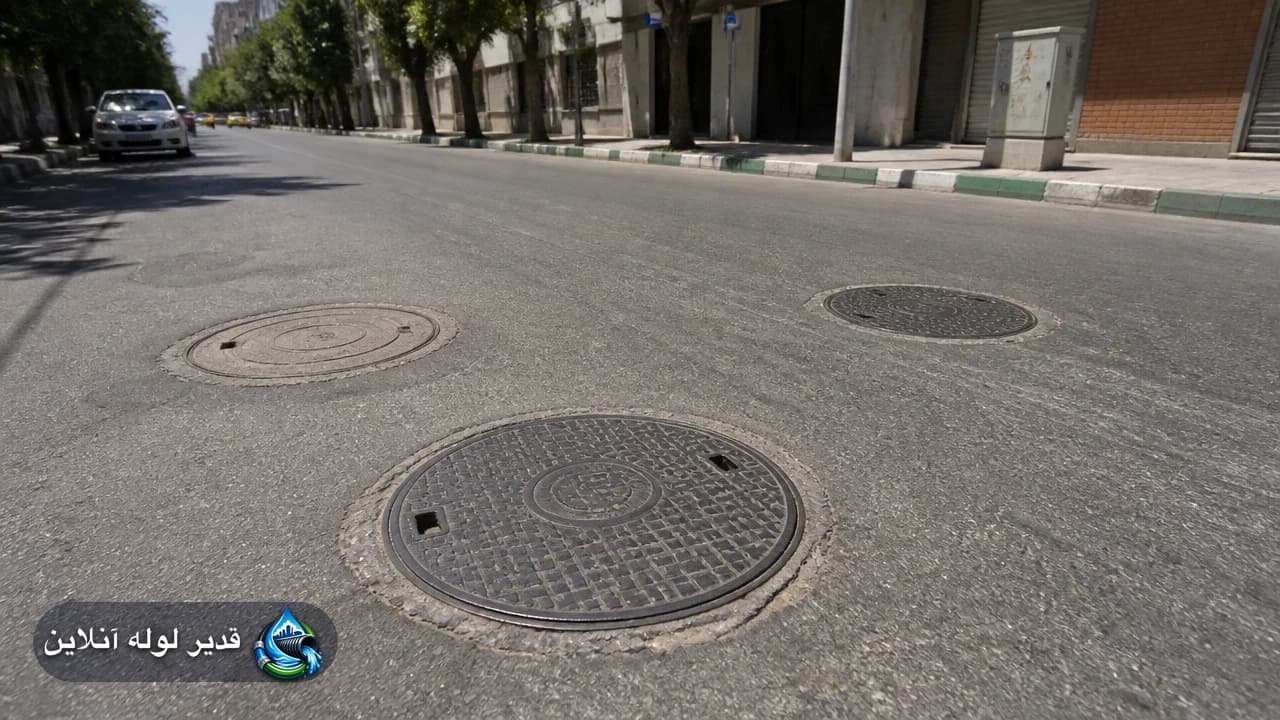
What is a manhole cover and what is it used for
Introduction
When access to pits, underground networks or utility routes is not easy, maintenance becomes harder and work safety drops. A manhole cover is a component installed over the opening of a manhole or access hole to cover the entry and inspection route, protect it and, at the same time, provide quick access to underground utilities.
In the construction industry this component is not just a simple cover; it is part of the order, safety and durability of the infrastructure. Choosing it correctly can prevent contamination from entering, people from falling in or equipment from being damaged, and it also makes inspection and repair work easier. Below you will learn about the types, applications and key points for choosing a manhole cover.
Types of manhole covers
Concrete manhole cover
Concrete manhole covers are usually used in spaces where strength and structural integrity matter most. This type of cover is made of concrete and, because of its high weight, resists unintended displacement and surface pressure well. On low-traffic routes, in industrial yards, workshop courtyards and areas where traffic loads are limited, this can be a suitable choice.
An important feature of a concrete cover is its compatibility with surroundings of the same material. In projects where the manhole body or its surroundings are concrete, this cover is simpler to install and gives a more uniform appearance. However, where frequent opening and closing is required, its high weight must be taken into account.
Cast iron manhole cover
Cast iron manhole covers are one of the most common options in urban networks and high-traffic environments. Because of its good resistance to pressure and impact, cast iron is very practical for roads, streets, car parks and vehicle routes. This type of cover is usually chosen when load capacity and durability are the priority.
Important features of a cast iron cover include high strength, a good working life and reliable performance in harsh conditions. In urban projects, when the cover is exposed to continuous vehicle traffic or drastic changes of use, cast iron offers more confidence than lighter options. For example, at the entrance to a car park or on the service route of large buildings, a cast iron cover is a practical, low-risk choice.
Plastic manhole cover
Plastic manhole covers are suitable for spaces without heavy loading where ease of installation matters more. This type of cover is lighter than concrete and cast iron covers and is also easier to transport. For this reason it is seen more often in gardens, light-duty yards, green spaces, low-traffic utility areas and some indoor building applications.
One of the main advantages of a plastic cover is that it is easy to move and quicker to install. In projects where frequent access to the manhole is needed and the operator must open the lid in a short time, this feature becomes very important. Before choosing one, however, make sure the installation location is not exposed to vehicle pressure or heavy loads, because this type of cover is not designed for such conditions.
Applications of manhole covers
Use in sewer networks
In sewer networks, manhole covers provide access to pits, main lines and points where the route changes direction. This access is essential for periodic inspection, flushing the line, clearing blockages and checking the condition of joints. When the cover is chosen and installed correctly, operating crews can reach the inside of the manhole without damaging the road surface and find the problem faster.
On streets and in urban areas, this cover plays an important safety role. A proper cover prevents rubbish, surface water and unwanted objects from entering the network and stops the manhole opening from being left exposed. For example, on a sewer line that lies in a vehicle route, if the cover does not have sufficient load capacity, the road surface is damaged and the risk of accidents for pedestrians and drivers rises.
Use in water networks
In water networks, manhole covers are used to access valves, fittings, inspection chambers and some control equipment. This access helps the operator check leaks, pressure drops or repair needs more quickly. In projects where pipes have been laid at depth, a suitable cover noticeably shortens inspection and repair time.
The importance of these covers is not limited to access; they also protect infrastructure components from external damage. A solid cover reduces the entry of dust, contaminated water and accidental impacts, and creates safer conditions for traffic around the site. For this reason, on urban utility routes, choosing a cover that suits the installation location is part of proper network design.
Use in power and telecommunication networks
In power and telecommunication networks, manhole covers are used to access cables, joints, cable routes and distribution or branch points. This access must be safe and must also allow precise servicing, because each time the manhole is opened it may be for inspection, replacing a part or repairing a fault.
In this area, security is doubly important. The cover must prevent unauthorized access while being simple and reliable for the technical team to open and close. If a telecommunication manhole on a busy street is not properly covered, the likelihood of damage to the cables rises, as does the risk of people falling in or water entering the chamber. So in these networks a manhole cover is not just a lid; it is part of the protection, operation and continuous performance of the infrastructure.
Key points in choosing a manhole cover
Selection criteria
Choosing a manhole cover does not depend only on appearance or price. First you must define the installation location, because a cover that is suitable for a sidewalk is not necessarily the right choice for an area that vehicles drive over. The load, type of traffic, manhole depth and environmental conditions such as moisture, corrosive substances or temperature fluctuations are among the most important criteria.
The cover material must also suit the application. On busy routes you need a cover that does not deform under pressure and impact and that also seals well. If the manhole is used for electrical installations, sewage or surface water, the opening dimensions, ease of opening and closing and the possibility of periodic access also become important.
For example, in an industrial yard with forklift traffic, a light, ordinary cover can be damaged very quickly. In such conditions you should choose a model whose load capacity matches the type of traffic and whose surface is also slip-resistant.
Safety points
Safety in choosing a manhole cover is not limited to the strength of the body. The cover surface should be designed to reduce the risk of people slipping when it rains or the surface is dirty. The lid must also sit fully on the frame so that it does not rock when pedestrians or vehicles pass over it and does not create extra noise or impact.
The weight of the cover is also an important safety factor. If the cover is too heavy, it is difficult for site crews to open and close, and the likelihood of injury during handling rises. On the other hand, if it is too light and unsuited to the installation location, it may shift as a result of pressure or impact.
In projects where frequent access to the manhole is needed, it is best to look for handles, lifting slots or similar details so that servicing can be done without hassle. Alongside these, the fit of the cover with the frame and the base also matters, because even a strong cover will not provide the necessary safety if it is not installed correctly.
Reputable brands
When choosing a brand, consistent quality and the product's match with the project's needs matter more than the trade name. A reputable brand usually provides clear technical information, is transparent about the material, dimensions and type of application, and supplies a product that is compatible with real installation conditions. This transparency reduces the risk of a wrong choice for engineers and contractors.
It is also best to consider the supply track record, production consistency and after-sales support. A brand whose products have performed acceptably in various projects is usually a safer choice, especially when harsh conditions such as heavy traffic, high humidity or the need for continuous inspection are involved.
In practice, brands should be compared on the basis of technical specifications, build quality and suitability for the installation location, not merely a well-known name. For example, if two covers look similar but one has better sealing, a more durable surface and a more precise frame, that option is worth more for a professional project.
Installation and maintenance of manhole covers
Manhole cover installation steps
Correct installation of a manhole cover starts with preparing the opening. First, the opening dimensions, the finished surface level and the conditions of the installation location must be checked so that the cover frame sits properly on its seating. If the surface around the opening is uneven or there is a height difference, the lid will later rock or take impacts under load.
Next, the frame is placed in position and fixed with mortar or suitable material. This must be done carefully so that the frame does not shift when loads pass over it. The lid is then placed on the frame and its opening and closing must be checked, because any jamming is a sign of incorrect installation or mismatched dimensions.
In urban or building projects, matching the type of cover to the installation location is very important. For example, if there is a vehicle route, a cover with a load capacity appropriate to that location must be used. To review suitable options, you can view manhole cover products.
Maintenance points
Manhole cover maintenance depends mostly on periodic checks and simple but regular care. One of the most important tasks is checking the condition of the frame and lid. If the edges become worn, rust appears on metal parts or the lid makes noise when closing, it should be inspected promptly.
Cleaning around the cover should not be neglected either. Accumulated soil, materials or rubbish in the seating can prevent the lid from closing fully and, as a result, let water or contamination in. In high-traffic environments, inspections are best carried out more regularly.
Lubricating moving parts, if the cover design has any, helps it open and close more easily. Also, after every inspection or repair of the underground network, make sure the lid is seated correctly on the frame and that no rocking or gap remains. In a residential project, this simple check prevents annoying noise when vehicles pass over.
Customer experiences when buying
When choosing a manhole cover, many buyers pay more attention to build quality and suitability for the installation location than to the product's appearance. The common experience is that if the choice is based on the project's actual conditions, fewer problems arise later in installation and maintenance.
Some customers have said that matching the dimensions and type of lid to the opening shortened the installation time and reduced the need for rework. Others point out that a product that closes precisely makes less noise in everyday use and gives a greater sense of confidence.
In project purchases, contractors' opinions usually revolve around three points: durability, ease of installation and suitability for environmental conditions. When these three are considered together, the final choice brings greater satisfaction and the likelihood of early replacement is reduced.
How manhole covers differ from other covers
Difference from ordinary covers
A manhole cover does not serve the same function as an ordinary cover. Ordinary covers are mostly used to close a simple opening, cover limited access or create a flush surface in light-duty spaces; a manhole cover, however, must cover an opening used for inspecting, repairing or passing underground equipment. This difference makes criteria such as load capacity, safety, locking method and ease of opening and closing more critical.
In practice, if you install an ordinary cover in a location with vehicle traffic or repeated loads, the likelihood of breakage, rocking or settlement around it increases. For example, in a yard with forklift or service vehicle traffic, the cover must be chosen with a suitable body and seating so that it is not damaged by point loads. Ordinary covers, by contrast, are more suitable for lighter spaces and low-risk access points.
On the other hand, a manhole cover must prevent surface water, soil, debris and unwanted objects from entering the space below. If this is not properly considered in the selection, the underground network will quickly suffer from blockages, contamination or difficulty of inspection.
Difference from special-purpose covers
Special-purpose covers are designed for particular conditions, which sets them apart from general manhole covers. Some of these covers are made for explosion-proof environments, spaces containing gas, corrosive industrial environments, locations requiring special sealing or points with security requirements. In this case, it is not just about covering the opening; the type of use, body material, sealing and even the locking method also matter.
For example, in an environment where there is a possibility of vapor or chemical leakage or a need for access control, an ordinary manhole cover may not be sufficient. In such a project, a cover must be chosen that matches the operating conditions, type of fluid, degree of corrosivity and required level of safety.
Understanding these differences is essential for the right choice, because a wrong choice does not just raise the purchase cost; it can also affect user safety, structural durability and ease of operation. By reviewing the installation location, type of traffic, environmental conditions and the need for periodic access, the engineer and contractor can decide more precisely between a general manhole cover and specialized types.
Summary
Overall, choosing a manhole cover depends on the type of installation location, the traffic volume and the need for periodic access. If the cover does not match the project conditions, it will either not perform properly under load or cause trouble during operation. That is why checking the material, dimensions and place of use before buying is so important.
If you need guidance to make a more precise choice, Ghadir Louleh Online can help you decide with its manhole cover buying guide. To learn more about the available options and get advice, visit ghadirlouleonline.ir.