 Rubika

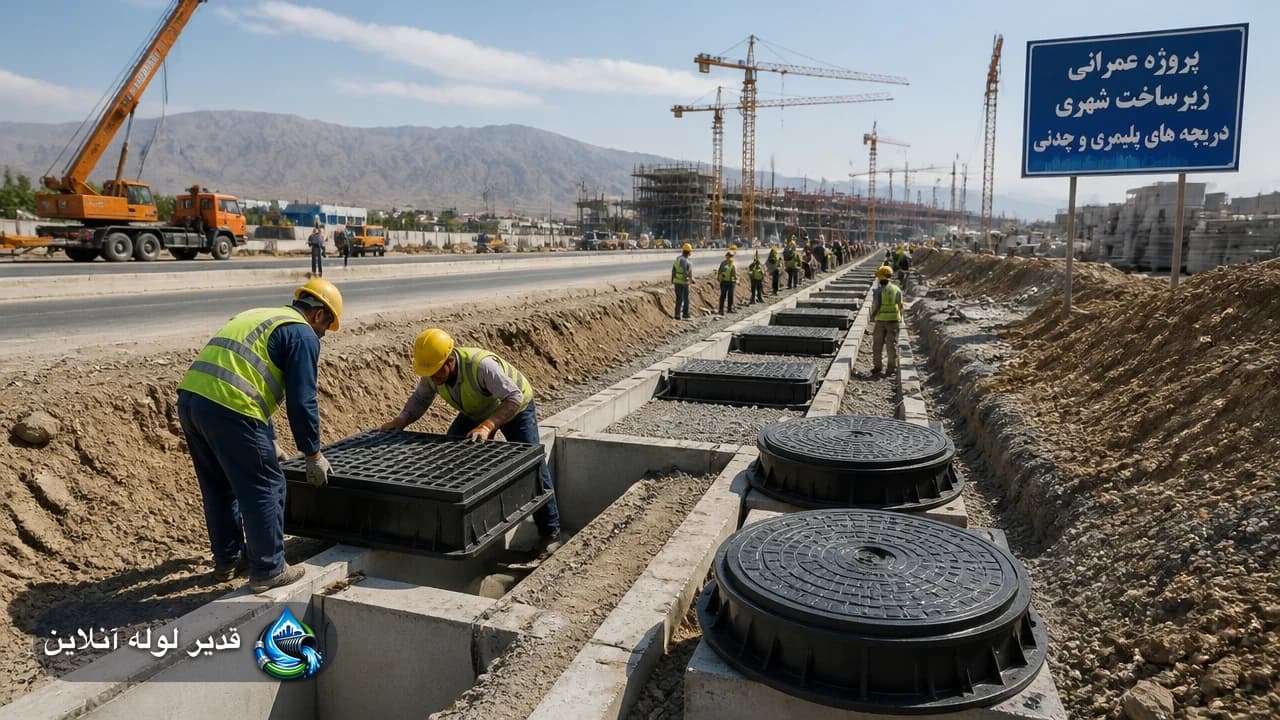
What Is the Difference Between Polymer and Cast Iron Manhole Covers?
Introduction
In any civil engineering or municipal utility project, a manhole cover is not just a simple lid; it is a point that must both provide safe access to underground networks and withstand pressure, traffic and environmental conditions. If this component is not chosen correctly, network maintenance becomes harder and the risk of damage, displacement or even danger to pedestrians and vehicles increases.
Among the available options, polymer and cast iron manhole covers are the most widely used, but each has its own characteristics and limitations. Polymer covers are usually known for their lower weight and adequate resistance under certain conditions, and cast iron covers for their strength and high load-bearing capacity.
Understanding the difference between these two types of cover helps project managers make a choice that suits the installation location, type of use and maintenance requirements. Below, we examine the differences from the perspective of performance, price, application and maintenance to support a more precise decision.
Advantages of Polymer Covers
Polymer and cast iron manhole covers are not the same in terms of use and installation conditions, but in projects where quick handling and easy installation matter, the polymer type has a clear advantage. The lower weight of these covers means that handling them on site, loading them onto vehicles and moving them to the installation point can be done with less manpower and without heavy equipment. In dispersed urban projects, such as side streets or utility areas where machinery access is limited, this reduces execution time and also lowers the risk of damage during handling.
On the other hand, polymer covers perform better against rust and corrosion. Because they do not easily deteriorate when exposed to moisture, surface water and many corrosive conditions, they appear to be a more reliable choice for spaces in constant contact with damp, water or mild chemicals. This feature becomes more important in environments such as urban green spaces, irrigation routes or places where water is likely to collect.
Another advantage is their better behavior with regard to heat and noise transmission. Compared with cast iron, a polymer body transmits less heat and cold and produces less noise under everyday impacts. For example, in residential areas or sidewalks with constant passage of people and light vehicles, this feature can reduce noise nuisance and create a better user experience.
Economically, polymer covers are also usually the more suitable choice, especially when a project needs a large number of covers. If a street project has several inspection openings, the cost difference per unit has a noticeable effect on the final budget overall. For this reason, in projects where cost control and speed of execution matter at the same time, polymer covers are often considered a more cost-effective option than cast iron.
Advantages of Cast Iron Covers
Advantages of Cast Iron Covers
Cast iron covers show their superiority when the installation location has to withstand serious traffic loads and repeated impacts. Thanks to its hard, dense structure, cast iron performs more reliably under the passage of heavy vehicles, sudden stops and impacts from municipal equipment. That is why cast iron covers are the more logical choice on busy streets, truck routes, high-traffic parking entrances and heavily loaded urban roads.
Moreover, the high strength of this type of cover is not limited to withstanding momentary loads; in projects where the cover must remain exposed for years to constant pressure, frequent opening and closing and harsh environmental conditions, cast iron usually shows greater durability. This matters to project managers, because premature failure of a cover not only creates replacement costs but can also disrupt operations, create unevenness in the road surface and increase safety risk.
One of the important advantages of cast iron covers is their resistance to wear from daily use. In environments with heavy traffic, a component that better retains its shape and performance keeps maintenance costs under control in practice. For example, on a central street where cars, vans and municipal service trucks pass over the cover every day, a cast iron cover is usually a more reliable choice than lighter options, because it is less prone to deformation or surface damage.
In short, if your project is in a high-traffic area or there is a high likelihood of pressure and impact, a cast iron cover can be the more suitable choice because of its high resistance, reliable strength and greater durability, especially when the main priority is long-term stability under harsh conditions.
Price Comparison of Covers
Price Analysis of Polymer and Cast Iron Covers
The price of polymer and cast iron manhole covers cannot be judged by the purchase amount alone. A polymer cover usually puts less pressure on the budget at the initial purchase, while a cast iron cover, because of its material and load-bearing capacity, falls into a higher price bracket in many projects. However, if the installation point is on a high-traffic road or a heavily loaded location, that same cast iron cover can become the more logical choice, because it meets the project's needs without concerns about weak performance.
For example, in a utility area with light traffic, using a polymer cover can keep the initial cost low. But on streets where heavy vehicles are likely to pass or the cover is likely to be opened and closed frequently, focusing purely on the purchase price may lead to a misleading decision. In such conditions, the cheaper choice is not necessarily the more economical one.
Factors Affecting Cover Prices
The price of these two types of cover depends on several factors. The type of raw material, opening dimensions, load class, type of use and build quality are among the most important factors that change the final figure. For cast iron covers, weight and the amount of metal used have a greater effect on price. For polymer covers, the quality of the material compound, the molding method and manufacturing precision play a decisive role.
Order conditions also matter. When a project requires large quantities, transport costs, speed of supply and production consistency affect the final estimate. Also, if the cover is to be installed in an environment with moisture, corrosive substances or special conditions, choosing a product suited to that environment can prevent later costs. For this reason, a project manager should review the price together with the installation location, traffic level and technical requirements, not separately from them.
Comparison of Maintenance and Repair Costs
The real cost of a cover is not determined only at the time of purchase; maintenance and repair are also an important part of the life-cycle cost. In many cases, a polymer cover creates lower installation costs because of its lower weight, simpler handling and easier installation. In contrast, a cast iron cover, although usually more durable and better suited to heavy loads, requires more manpower and time whenever it needs to be moved, inspected or replaced.
Consider a practical example: in an urban project with several inspection openings at different points, if the covers regularly need to be opened and closed for utility servicing, the higher weight of cast iron can increase maintenance costs. On the other hand, in places where impact, pressure or heavy traffic is common, a cover that is damaged later and needs replacing less often will be more cost-effective in the long run. Therefore, a price comparison of covers should assess both the initial purchase and the costs of installation, servicing and repair.
Applications of Manhole Covers
Use in Urban Projects
In urban projects, the choice between polymer and cast iron manhole covers depends on the installation location and traffic level. On sidewalks, low-load areas and spaces without heavy vehicle traffic, a polymer cover usually meets the project's needs and, because of its lower weight, can be installed and handled more quickly. For projects with multiple access points, this feature reduces execution time and simplifies the coordination of civil works.
In contrast, on high-traffic streets, parking entrances and routes with heavier passing loads, a cast iron cover is considered the more reliable choice. By choosing correctly between these two types of cover, a project manager can prevent premature damage, unintended opening or the need for early replacement. This correct choice also helps optimize the urban system, because access to the underground network remains stable and subsequent repair costs are reduced.
Use in Water and Wastewater Facilities
In water and wastewater networks, a manhole cover provides safe access to valves, fittings and inspection routes. In areas with low traffic loads, a polymer cover is suitable for covering inspection openings, chambers and some parts of the facilities. This type of cover makes the work easier for operations teams at points that are opened and closed periodically.
Cast iron covers, however, are more widely used at openings subject to greater mechanical pressure. For example, alongside the main network routes or at points where machinery may pass, cast iron provides greater durability. In such conditions, choosing the right cover helps maintain continuous operation and prevents disruption to the water and wastewater network.
Use in Various Industries
In industrial environments, the type of cover must match the operating conditions. In factories, workshops and production complexes, polymer covers are mostly used in low-load sections or indoor spaces, where weight reduction and ease of installation are important. This advantage is also useful during periodic maintenance, because the cover can be opened and closed with less effort.
In parts of industry where forklifts, trucks or heavy equipment pass, a cast iron cover is the more suitable option. For example, in a factory's loading area, a cast iron cover can better withstand constant pressure. For this reason, by choosing correctly between these two types of cover, industrial facility managers both maintain route safety and prevent unplanned stoppages in operations.
Safety Considerations When Choosing a Cover
The Importance of Safety in Choosing Manhole Covers
Safety in choosing a manhole cover is not limited to withstanding the weight of vehicles or pedestrians. The cover must also be secure against sudden displacement, edge breakage, slipping on the frame and unintended opening. If these issues are overlooked, there is a risk of people falling, damage to underground facilities and even interruption of municipal operations.
On high-traffic roads, an unsuitable cover can become loose over time or create noise and impact under constant load. These seemingly simple signs are usually an early warning of a more serious safety problem.
Criteria for Choosing the Right Cover
The choice of cover should be based on the installation location, type of traffic and environmental conditions. For example, a cover installed on a sidewalk has different requirements from one placed on a route used by trucks or machinery. In this choice, the cover material alone is not enough; attention must also be paid to the opening dimensions, the type of frame, how flush it sits with the surface and its locking method.
The cover surface is also important. A cover with a slippery surface increases the risk of accidents in rain or during street washing. Also, in projects with heavy equipment traffic, it must be ensured that the cover and frame are compatible and transfer the load correctly.
Technical and Safety Points for Installation
Correct installation is as important as correct selection. If the cover frame is not level, the load is not distributed evenly and, as a result, the edges are damaged more quickly. The installation location must be fully prepared before the cover is placed so that localized settlement or loosening does not occur in the future.
In a street project, if the cover is installed on an uneven surface, even a slight difference in height can be hazardous for pedestrians or cyclists. For this reason, after installation the cover should be checked for flushness, stability and proper opening and closing.
Also, at points where unauthorized access is possible, the use of a lock or restraining mechanism becomes more important. This prevents accidental opening of the cover and improves the safety of the area.
How to Maintain Covers
Maintenance Methods for Polymer and Cast Iron Covers
Maintenance of polymer and cast iron manhole covers should be based on the material, installation location and traffic level. For polymer covers, periodic inspection of the surface, edges and seating is important so that fine cracks, warping or loosening are detected early. These covers are usually sensitive to the cleanliness of the seating; if mud, sand or debris collects under the edge, the lid does not sit properly on the frame and creates noise or vibration when vehicles pass.
For cast iron covers, the main focus is on checking for corrosion, breakage, loosening of the hinge or seating and wear of the surface coating. In damp environments or areas exposed to corrosive substances, regular cleaning and rust control become more important. If the cover is installed on a high-traffic road, the condition of the frame and its surroundings should also be checked so that localized settlement does not put extra pressure on the lid.
Key Points in Repair and Maintenance
For both types of cover, repair should begin with a full inspection of the frame, lid and installation location. Tightening connections, removing deposits and making sure the cover sits correctly on its seating are among the simplest measures that prevent premature failure. If the cover is cracked or deformed, temporary patching is usually not a reliable solution and replacing the component may be safer.
For projects that need to replace or source several covers, it is best to review the specifications and available options at View manhole products before purchasing, so that the choice matches the installation conditions. In practice, if a cast iron cover has developed rust around the edge after repeated rainfall, early attention can prevent the damage from spreading to the frame and the surrounding paving.
The Importance of Timely Maintenance for Extending Cover Life
Timely attention does not only prevent failure; it also extends the service life of the cover and lowers replacement costs. When a loose cover or one with surface cracks is identified at an early stage, it can usually be dealt with by a simple measure. But if the problem is neglected, the load of passing pedestrians or vehicles makes the damage more extensive and can even make the route unsafe.
For project managers, a regular inspection schedule is the best way to maintain the performance of covers, especially at points with high traffic loads, moisture or environmental pollution. Regular maintenance helps covers remain effective for longer and also reduces the cost of emergency repairs.
Conclusion
Polymer and cast iron manhole covers are each suited to different conditions. The polymer model is usually the more practical choice in projects where lower weight, easier handling and cost management matter; in contrast, cast iron covers have a special place in locations with higher traffic pressure and loading. So the main difference between these two products is not only the material, but also the type of use, installation conditions and the level of performance you expect from them.
If a cover is chosen without regard to the project's real needs, repair, replacement or maintenance costs may rise in the future. That is why it is best to carefully review the installation location, traffic level and execution priorities before purchasing.
Along the way, Ghadir Louleh Online is known as a source for purchasing polymer and cast iron manhole covers and can help you choose what suits your project. To review the available options, visit ghadirlouleonline.ir and make your purchase based on your real needs.
About the Ghadir Louleh Online Store
The Ghadir Louleh Online store is a practical choice for project managers who need to source several types of components through a single, defined channel at the same time. When the execution schedule is tight and the purchasing team must quickly compare different options, having a centralized supplier makes ordering, coordination and delivery simpler. This is very important in civil and municipal utility projects, because a delay in supplying one component can set back the entire installation schedule.
Overview of Ghadir Louleh Online Services and Products
Ghadir Louleh Online is active in supplying the equipment projects need and enables buyers looking to source covers, particularly in various types, to review and select them. Such a store becomes more valuable when a project requires multiple, coordinated orders rather than a one-off purchase; for example, an urban work site may need several cover models with different specifications for several inspection openings, and buying from a single source makes order management easier.
Emphasis on the Quality and Variety of Covers Offered
When choosing a cover, the mere availability of a product is not enough; build quality, suitability for the installation location and consistency of supply also matter. A store that offers a good variety of covers allows the buyer to decide based on the type of project, not on stock limitations. This variety is very important for projects where some parts are carried out in low-traffic areas and others on high-traffic routes, because the needs of each point are not the same and a wrong choice can create repair or replacement costs in the future.
The Store's Role in Meeting the Needs of Civil Projects
In civil projects, a successful purchase does not end with finding the product; delivery scheduling, coordination of the required quantities and uniformity of the items are also decisive. Ghadir Louleh Online can act as a supply reference for such projects, especially when the contractor must procure components step by step in line with the progress of the work. In practice, if a street project needs covers at several points, buying from a store that can meet different needs through a single supply channel reduces the execution pressure on the team and brings more order to the installation work.
Detailed Analysis of Advantages and Disadvantages
On closer examination, the difference between polymer and cast iron manhole covers is not limited to weight or price; the main question is in which environment each one lasts longer and what limitations each creates. A polymer cover performs well against moisture, rust and some corrosive substances, and causes fewer problems in spaces with constant contact with water, steam or wastewater. In contrast, because of its metallic structure, a cast iron cover is better suited to locations with high traffic pressure and mechanical loading, but this same feature means it needs more care against corrosion and rust.
In terms of execution, both types also have their own advantages and disadvantages. A polymer cover is lighter and needs less manpower to handle on site or during installation; however, on routes with heavy vehicle or construction equipment traffic, it must be chosen more carefully to avoid damage. A cast iron cover appears more reliable in such conditions, but its heavy weight makes installation harder and, if it needs to be opened and closed frequently, it takes more time and effort. For example, in an industrial area with several periodic inspection points at ground level, cast iron may be chosen for its load-bearing capacity; but in a network of manholes inside green spaces or low-traffic areas, a polymer cover is usually more sensible.
The environmental impact of the materials also matters in this choice. In terms of production and recycling, cast iron depends more on energy-intensive processes and, without a suitable coating, the likelihood of rust and a decline in its appearance and performance increases. Polymer covers are usually more resistant to this type of corrosion and need less painting and surface repair in damp or chemical environments. However, their environmental sustainability depends on the quality of the raw material and the production process, and if a project is aiming for long-term durability along with reduced maintenance, the installation location, load level, moisture conditions and contact with corrosive substances must be assessed together. In practice, the right choice is made when the technical advantage of each cover matches the real conditions of the project, not just its appearance or initial price.