 Rubika

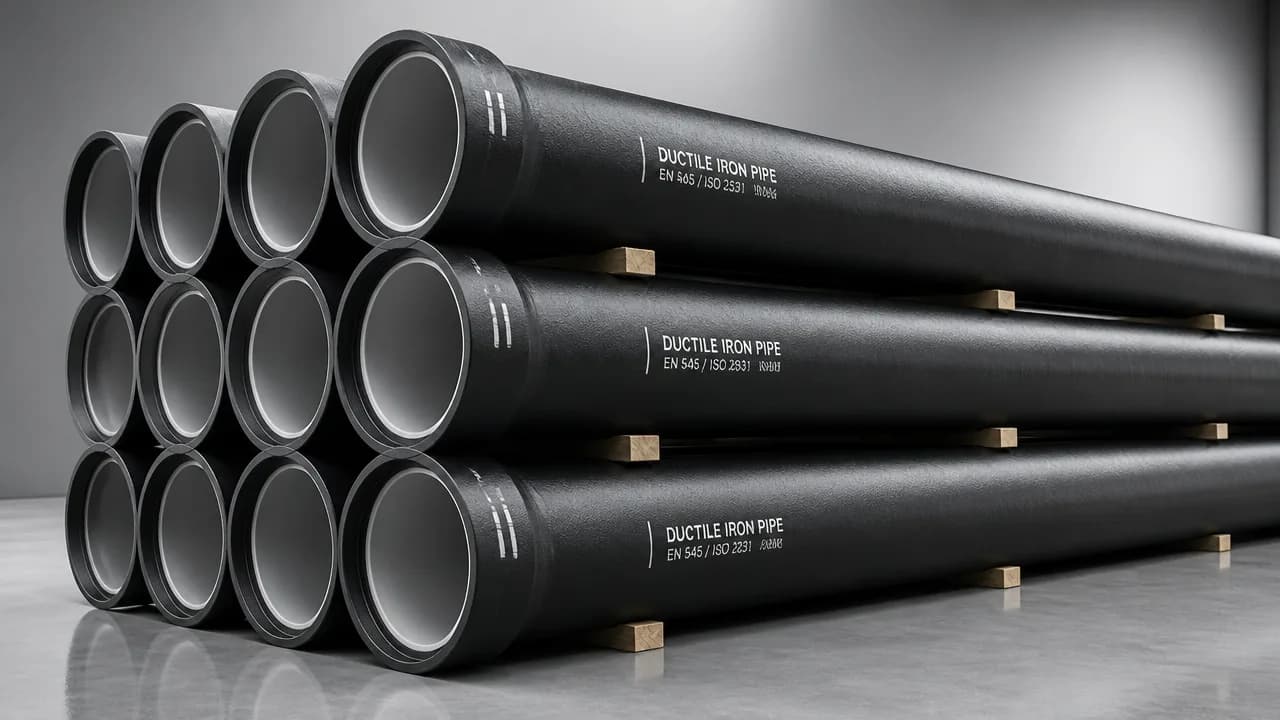
When a water supply network suffers from leaks, breaks or pressure drops, choosing the pipe type is not just a purchasing decision; it directly affects network reliability, maintenance costs and operating quality. Among the options, ductile iron for water supply has attracted the attention of many contractors and engineers because of its good strength, high durability and reliable behavior under various operating conditions.
Ductile iron is a type of cast iron pipe with a modified structure that is used in urban water supply and infrastructure projects. But whether it is the best choice for every project depends on construction conditions, operating pressure, soil type and maintenance requirements.
In this article, we review the advantages, limitations, comparison with other options and the technical points to consider when choosing this pipe, so you can make a more informed decision.
Advantages of Ductile Iron for Water Supply
High Resistance to Corrosion and Pressure
In water supply projects, a pipe is worth choosing if it stays stable under operating pressure and does not lose performance in constant contact with water and moisture. Ductile iron for water supply is strong on exactly these two points: its structure is suited to withstanding operating pressures, and with the right coating and fittings it also performs reliably against corrosion. For this reason, in networks with pressure fluctuations or where parts of the route run through moist and corrosive soil, choosing it can give the contractor greater peace of mind about the line's durability.
In practice, this property is not limited to the pipe itself; the fittings, installation method and coating quality also determine how well the system resists wear and pressure. If a pipe is installed along a route through rocky soil or areas with high moisture, it is this mechanical strength and surface protection that prevents premature damage.
Long Service Life and Lower Maintenance Costs
One of the main reasons for choosing ductile iron pipe is that, once properly installed, the need for repeated repairs usually decreases. In a water supply network, every leak or break involves more than repair costs; service interruption, re-excavation, site coordination and disruption along the route are added to it. When the pipe is more durable, these hidden costs also decrease.
For example, on an urban transmission line that is difficult to access, if the pipe is damaged early, the cost of repair will be far greater than the cost of the component itself. In such conditions, a pipe with a longer working life is the more economically sensible choice, even if a decision based only on initial price does not seem straightforward at first.
Compatibility with Different Water Types and Weather Conditions
Ductile iron is known in many water supply systems for its good compatibility with diverse environmental conditions. This pipe can perform acceptably on routes carrying water with different characteristics and does not deteriorate quickly under changes in temperature, humidity and weather. For projects carried out outdoors, underground or in areas with variable climates, this compatibility is an important advantage.
From a construction standpoint, this means you do not need to adopt a completely different solution for each section of the route. If the system is built in an area with cold winters and hot summers, or deals with different water sources along the route, ductile iron can be a flexible choice, provided its design, coating and installation are matched to the real conditions of the project. This compatibility with the environment reduces the risk of premature failure and keeps network maintenance simpler.
Comparing Ductile Iron with Other Pipes
Comparison with PVC Pipes
PVC pipes are attractive in many projects because of their low weight, fast installation and lower initial price. For networks without high operating pressure, water hammer or heavy mechanical loads, these pipes can be an economical option. But this same lightness becomes a weakness on routes with unstable soil, heavy traffic over the trench or a high risk of impact during installation.
On the other hand, ductile iron for water supply provides a greater safety margin against external loads and harsher conditions. If the pipe route passes beneath a busy street, through an industrial zone or somewhere with significant soil variations, ductile iron is usually the more reliable choice. In return, its supply and installation costs are higher than PVC, which tips the decision in favor of PVC in low-pressure or short-run projects.
For example, in a branch network within a site with uniform pressure and easy access for repairs, PVC can make economic sense. But in the same project, if part of the route passes beneath a main road or an area prone to settlement, using ductile iron reduces the risk of failure and later costs. So the choice between the two depends more on operating conditions and the installation environment than on purchase price alone.
Comparison with Steel Pipes
Steel pipes rank among the robust options in terms of mechanical strength and resistance to heavy-duty conditions. These pipes perform acceptably in certain special projects where pressure, impact or high structural requirements are involved. However, their sensitivity to corrosion and the need for careful surface protection raise maintenance costs in many water supply networks.
In comparison, ductile iron usually strikes a better balance between strength, durability and ease of operation. In many networks, this pipe can be more suitable for long-term use without requiring the continuous anti-corrosion care that steel does. Of course, if the project is carried out in an environment with special corrosion conditions or particular technical requirements, steel still has its place; but it should be chosen with coatings, periodic inspection and maintenance costs taken into account.
In terms of cost, steel may appear competitive in some sizes and construction conditions, but its ancillary costs should not be overlooked. Ductile iron, by contrast, may be more expensive at the start of the project, but in networks where service interruptions or repeated repairs are costly, this initial difference can be recovered over the operating life. For this reason, in urban and intercity water supply systems, ductile iron is often seen as a reliable middle option: more resistant than PVC to environmental stresses, and less troublesome than steel in day-to-day maintenance.
Applications of Ductile Iron in Water Supply Systems
Use in Water Distribution Networks
Ductile iron for water supply is widely used in urban distribution networks, transmission routes between stations and main lines that must withstand both pressure and mechanical stress at the same time. This pipe proves its worth where the route passes beneath a street, alongside existing utilities or through soil prone to settlement; that is, where the network is not only dealing with water pressure but must also withstand external loads and environmental changes.
In urban projects, ductile iron is used for main lines, important branch connections, bypassing obstacles and connecting different parts of the network. If a section of the network is meant to be easier to repair in the future, this pipe is a common choice because of its reliable joints and good mechanical behavior. For example, on a route passing beneath a busy intersection, the contractor usually prefers a pipe that is less sensitive to traffic loads and construction impacts while still allowing reliable sealing.
Ductile iron should be selected for these applications with regard to operating pressure, burial depth, soil type, the level of ground vibration and ease of access for repairs. On a route with heavy machinery traffic or potential soil movement, focusing only on the pipe material is not enough; the coating type, jointing method and installation quality must also be chosen to match those same harsh conditions.
Use in Irrigation and Orchards
In the irrigation of farms, orchards and extensive green spaces, ductile iron for water supply is mostly used in sections where the line must be long, stable and require little servicing. This pipe is a practical option for main supply routes, transfer between reservoirs and distribution points, and sections where there is a risk of contact with agricultural equipment or soil pressure.
In large orchards, the network sometimes has to serve both drip irrigation and water draw-off points for washing or spot irrigation. In such conditions, choosing ductile iron makes more sense when route stability, resistance to mechanical damage and reliable sealing matter more than ease of handling. For example, if the pipe passes beneath a route used by tractors or orchard implements, a more robust material can reduce the risk of damage from surface loads.
For special applications, ductile iron should be chosen based on the network's operating pressure, soil quality, the likelihood of constant exposure to moisture, route length and the need for future expansion. If the project is carried out in an area with large temperature changes or where the soil moves more in some seasons, attention to the protective coating and jointing details becomes more important. Also, in systems where different parts of the orchard operate with different pressure losses, correct diameter design and routing become even more important than the choice of pipe material itself.
Installation and Maintenance Tips for Ductile Iron Pipes
Correct Installation Methods
Correct installation affects the service life of ductile iron for water supply more than any other factor. If the bed is unsuitable or the joints are not made up with sufficient care, the pipe becomes more vulnerable to localized pressures, soil settlement and changes in operation. For this reason, before placing the pipe in the trench, the bottom of the route must be prepared to be uniform, clean and suited to the soil conditions so that the load is not concentrated on a single point.
During installation, pipe alignment and the sealing quality of joints are very important. Any deviation in the pipeline or neglect of the cleanliness of the joint area can later lead to small leaks and reduced network performance. Impacts and scratches to the surface must also be avoided when handling and lowering the pipe into the trench, because seemingly minor damage becomes a weak point during operation.
For example, on a transmission line passing through heterogeneous soil, if the bed under the pipe has not been properly compacted, part of the pipe's weight falls on one area and over time the likelihood of localized failure increases. By contrast, careful bedding and staged backfilling around the pipe distribute the pressure evenly and keep the network's performance more stable.
Periodic Maintenance and Repairs
Periodic maintenance of ductile iron pipes should proceed along two lines: monitoring visual condition and checking the hydraulic performance of the network. Regular inspections of the pipe route help detect leaks, localized corrosion, joint displacement or damage caused by ground settlement earlier. The sooner these signs are seen, the smaller the scope of repairs and the lower the cost of intervention.
In practice, the operations team should inspect sensitive points such as joints, valves, changes of direction and crossings through high-stress areas more carefully. If a slight leak is seen at a joint, replacing or resealing that section is usually better than waiting for the damage to spread. Keeping the surroundings of the route clean and recording visible changes during periodic inspections also makes it easier to identify the progression of wear.
For effective maintenance, assessing network performance should not be limited to the appearance of the pipe. Abnormal pressure drops, unusual noises in the line or sudden changes in flow rate can indicate a problem somewhere along the route. When these signs are checked through field inspection and simple tests, ductile iron pipes in a water supply network operate stably and reliably for longer.
Quality Standards and Testing Methods for Ductile Iron
National and International Standards
Compliance with standards for ductile iron for water supply is not just an administrative requirement; it directly affects line durability, joint sealing and the pipe's behavior under operating pressure. When the manufacturer, contractor and supervisor all work to a common reference, the likelihood of discrepancies in wall thickness, coating quality, dimensional tolerances and joint type decreases, and installation proceeds with fewer errors.
In water supply projects, recognized standards usually cover three areas: the material and mechanical properties of the pipe, dimensions and joints, and the quality of internal and external coatings. For engineers and contractors, it is important not to rely on the name "ductile iron" alone but to make sure the product has a certificate of conformity and quality control documentation. This becomes especially important on routes with variable pressure, corrosive soil or ground settlement.
For example, if on an urban route the pipe is installed in moist soil under heavy traffic, the right standard helps ensure the pipe performs acceptably against mechanical stresses and premature corrosion. In such conditions, manufacturing quality is as important as network design, because even the best design will not achieve the desired result with a non-standard product.
Pipe Testing and Evaluation Methods
Quality evaluation of ductile iron pipes usually consists of several stages. First, a visual inspection is carried out to check for cracks, voids, warping, coating damage and defects at the sockets or joints. This stage seems simple, but many defects that would cause installation problems are identified right here.
The next stage is dimensional inspection; that is, diameter, wall thickness, length, concentricity and the condition of the joint seating are checked against the project drawings and specifications. If this step is not done accurately, you will face leaks, difficult jointing or unwanted stress in the line during installation.
Next, mechanical and pressure tests are carried out to ensure the pipe's resistance to internal pressure and construction loads. In some projects, sampling from production lots or quality control tests on production batches are also important to measure product consistency.
In addition, internal and external coating tests are essential to check adhesion, uniformity and corrosion resistance. If the pipe is to operate in corrosive soil or a humid environment, these tests are not just supplementary; they are part of the core decision. In practice, the best result is achieved when factory testing, inspection on delivery and installation control on site are carried out together, because the real quality of a pipe is not determined on paper alone but shows itself along the installed route.
Real User Experiences and Technical Selection Tips
Technical Tips for Choosing the Right Pipe
When choosing ductile iron for water supply, you should not rely on the name of the pipe material alone. The first criterion is the network's actual operating pressure; a pipe that looks suitable on paper can cause trouble in practice if the route experiences pressure fluctuations, water hammer or steep gradients. After that, attention must be paid to the required diameter, wall thickness, type of internal and external coating and the jointing method, because each of these affects leakage, corrosion and installation speed.
A common mistake is that the contractor chooses the pipe based only on the initial price and ignores soil conditions. In corrosive soils or where moisture persists, if the protective coating and fittings are not chosen correctly, the network's service life is shortened. Also, if the installation route is subject to ground settlement, choosing a pipe that better handles deformation and external loads becomes more important.
For a more precise decision, it is best to consider three questions together: at what pressure will the pipe operate, what type of water will flow through it, and what experience does the installation team have with it. If the answers to these three are clear, your choice moves from guesswork to a technical decision.
Users' Successful and Unsuccessful Experiences
In projects where design and construction were coordinated, users have generally been satisfied with network stability and the reduced need for repeated repairs. For example, on an urban water transmission route where excavation and bedding were carried out carefully before installation and the joints were sealed with care, the operator did not face scattered leaks or frequent shutdowns after commissioning. This kind of experience shows that installation quality is as important as the quality of the pipe itself.
By contrast, unsuccessful experiences mostly start in three places: a choice unsuited to the project conditions, poor jointing and neglect of external protection. Some users report that the pipe material was suitable, but problems arose in the very first months due to poor bed preparation or impacts during handling. Some cases also come down to poor sealing, where a small leak was not taken seriously at first and later led to pressure loss and more extensive repairs.
The lesson from these experiences is that the best option is not always the most expensive or best-known one. To choose better, you need to consider soil conditions, network pressure, installation quality and future maintainability together. When these factors are examined carefully, ductile iron can be a reliable choice; but if any one of these links is weak, even a suitable pipe will not deliver the desired result.
Conclusion
When choosing ductile iron for water supply, three points are most decisive: the pipe's suitability for the pressure and soil conditions, careful installation and the quality of the supplier. If any of these three is overlooked, even a high-strength pipe can cause problems in operation. For this reason, ductile iron shows its real value when, in an urban or infrastructure project, it is both chosen correctly from a technical standpoint and sourced from a reliable supplier.
Ghadir Louleh Online currently supplies double-wall corrugated pipe, spiral pipe and corrugated pipe fittings for sewer and stormwater networks; for choosing pressure water supply pipe, consult your project's technical advisor.